Iran Post-Khamenei Era Echoes China's Post-Mao Period, Analyst Suggests
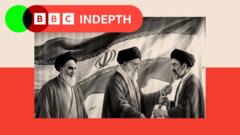
Following the funeral of Iran's Supreme Leader Ayatollah Ali Khamenei, a significant political transition is anticipated. According to analyst Mr. Vaez, this moment bears resemblance to China's post-Mao Zedong era. Vaez suggests that the Iranian system recognizes the necessity for change during this period. The incoming leadership is expected to understand the need for a new social contract with the populace. This implies a potential shift in the country's political and social dynamics as it navigates the post-Khamenei landscape. The comparison to China's reform period highlights the potential for significant policy adjustments and a redefinition of the state's relationship with its citizens.
The comparison of Iran's post-Khamenei transition to China's post-Mao era offers a framework for understanding potential systemic shifts. This analogy suggests that periods of significant leadership change can catalyze institutional reevaluation and the pursuit of new social compacts. The core dynamic involves the ruling apparatus acknowledging the need for adaptation in response to evolving societal expectations or internal pressures. The challenge for any new leadership in such a context is to balance continuity with reform, managing internal factions while addressing external challenges and citizen demands. The long-term success will likely hinge on the ability to forge a sustainable governing model that can adapt to future technological and societal changes.
AI-generated to prompt reflection — not editorial opinion, not advice, not a statement of fact. How this works.