Iran's Funding Sources Amid Sanctions and Attacks
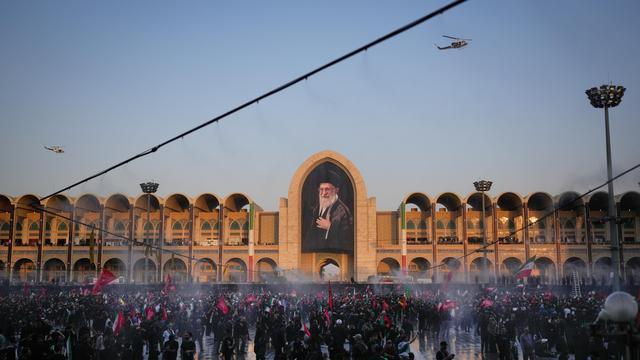
Despite facing stringent international sanctions and two direct attacks, Iran continues to maintain its financial and military resources. The regime's ability to sustain itself is not solely attributable to its relationship with China. This resilience suggests a complex network of financial flows and revenue generation strategies that circumvent existing punitive measures. The ongoing availability of funds and ammunition indicates a persistent capacity to operate, even under significant external pressure. Further investigation into these alternative funding mechanisms is crucial to understanding Iran's economic and geopolitical standing. The situation highlights the limitations of current sanctions regimes in fully isolating targeted nations. It also points to the adaptability of states seeking to maintain their operational capabilities despite international restrictions. The question of where Iran obtains its financial resources remains a critical point of analysis for global policymakers and intelligence agencies.
Iran's sustained financial capacity despite sanctions and attacks suggests that international punitive measures may not be fully achieving their intended isolation effects. This resilience likely stems from a combination of factors, including diversified trade relationships beyond major powers, the utilization of informal financial networks, and potentially domestic economic adjustments. The situation presents a challenge for global governance, as it underscores the need for more comprehensive and adaptive strategies to address state financing in a sanctions-constrained environment. Future policy considerations might involve a deeper understanding of these circumvention tactics and the development of mechanisms to counter them, while also acknowledging the potential for unintended humanitarian consequences of prolonged economic pressure.
AI-generated to prompt reflection — not editorial opinion, not advice, not a statement of fact. How this works.