Iran's Interior Minister Visits Pakistan Amidst Escalating US Conflict
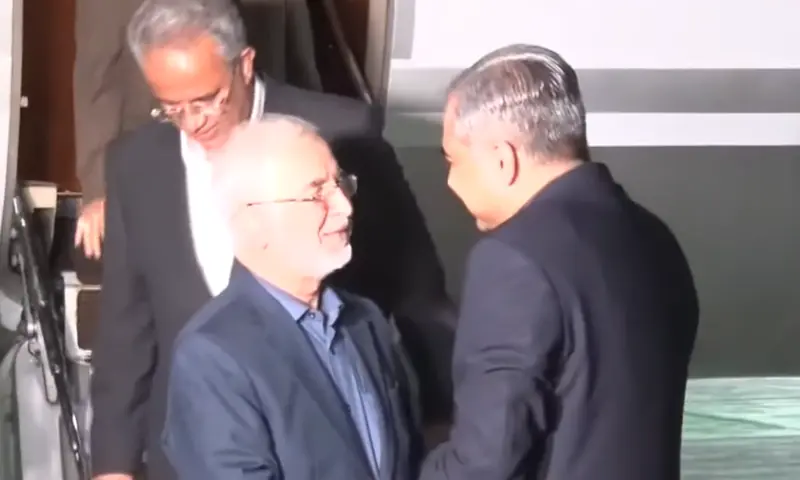
Iranian Interior Minister Eskandar Momeni arrived in Islamabad on Monday night for an official visit, where he was welcomed by his Pakistani counterpart, Mohsin Naqvi. During his trip, Momeni is scheduled to meet with Prime Minister Shehbaz Sharif and Chief of Defence Forces and Chief of the Army Staff Field Marshal Syed Asim Munir. This visit occurs as Pakistan continues diplomatic efforts to revive the Islamabad Memorandum of Understanding (MoU), an interim ceasefire agreement between the US and Iran that has recently collapsed. The situation is tense, with the US expanding its strikes across Iran, including near a nuclear power plant, on the ninth consecutive night of attacks. Iran has retaliated with its own strikes targeting Bahrain, Jordan, and Syria, with Bahrain reporting that Tehran targeted its air navigation systems. Both leaders have described the conflict as a "full-scale war," with Tehran blaming Washington for violating the MoU. Despite the ongoing hostilities, Iran's foreign ministry has indicated that diplomatic exchanges with the US, facilitated by mediators, are continuing. The conflict resumed after a lull following the June agreement, leading to a surge in oil prices and renewed blockades of the Strait of Hormuz by both Iran and the US.
The escalating conflict between the US and Iran, mediated by Pakistan, highlights the fragility of interim agreements in volatile geopolitical landscapes. The breakdown of the Islamabad MoU underscores the challenges of de-escalation when core strategic interests, such as control over vital maritime chokepoints like the Strait of Hormuz, remain contested. Future diplomatic frameworks may need to address these underlying economic and security drivers more comprehensively to achieve sustainable peace, rather than relying solely on temporary ceasefires. The involvement of multiple regional actors and the potential for wider destabilization necessitate a multi-faceted approach to conflict resolution, considering the long-term implications for global energy markets and international security in the coming decade.
AI-generated to prompt reflection — not editorial opinion, not advice, not a statement of fact. How this works.