Iran's Leadership Transition: A New Era or Familiar Path?
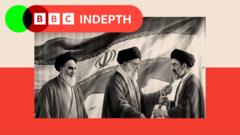
The recent funeral of Ayatollah Ruhollah Khomeini serves as a stark reminder of the significant changes Iran has undergone since his passing. The question now facing observers is the direction and objectives of the country's new leadership. While the specific policies and priorities of the successor regime are still unfolding, the transition itself marks a pivotal moment in Iran's modern history. The international community will be closely watching to understand the implications of this new leadership for regional stability and global relations. The internal dynamics within Iran will also play a crucial role in shaping the country's future trajectory. Understanding the motivations and strategies of the new leadership is key to deciphering Iran's path forward. This period of transition presents both opportunities and challenges for Iran and its international partners. The legacy of the previous era continues to influence the present, but the new leadership is poised to define its own distinct chapter.
The transition of leadership in Iran, marked by significant events like Ayatollah Khomeini's funeral, necessitates a dispassionate examination of the nation's evolving political landscape. Analyzing the regime's future actions requires understanding the interplay between internal power structures, ideological underpinnings, and external geopolitical pressures. The leadership's stated objectives, when contrasted with their implemented policies, will reveal the extent to which the new era diverges from or perpetuates past strategies. Evaluating these shifts through the lens of long-term regional stability and Iran's integration into the global economy offers a framework for assessing potential future developments. The challenge lies in discerning genuine policy shifts from rhetorical adjustments, particularly in a complex geopolitical environment.
AI-generated to prompt reflection — not editorial opinion, not advice, not a statement of fact. How this works.