Iran's Massive Funeral for Ayatollah Khamenei Sends Message to US
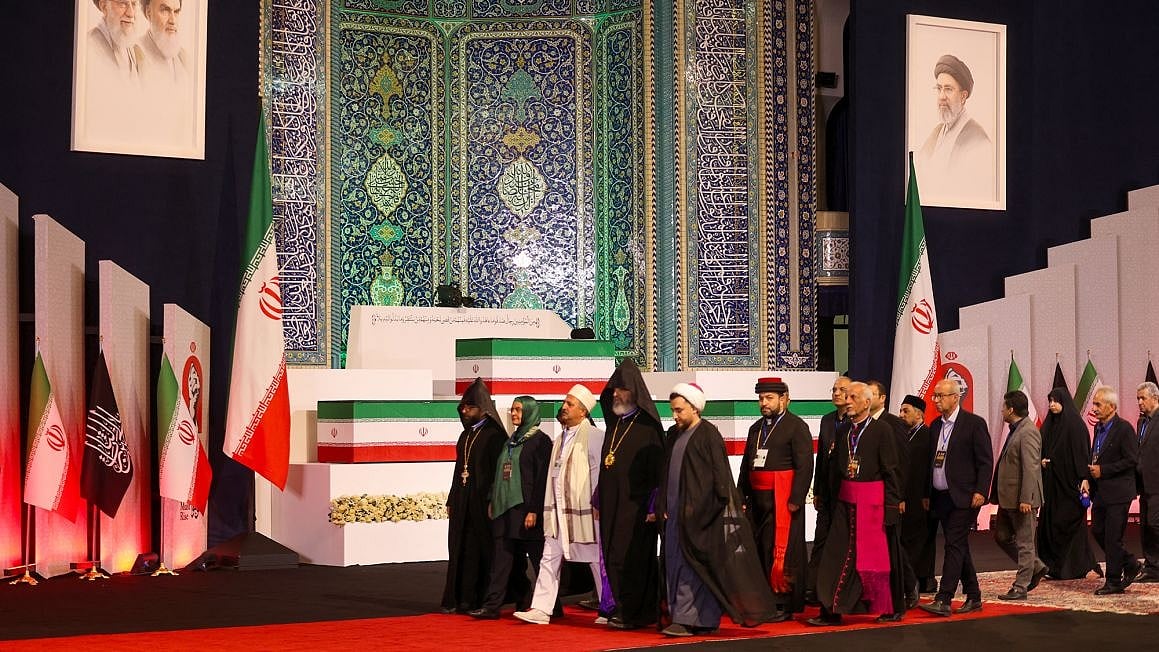
Iran is holding extensive funeral ceremonies across five cities for its Supreme Leader, Ayatollah Ali Khamenei, who was killed four months ago in an attack attributed to the US and Israel. Millions of mourners are participating in these events, which are proceeding despite a costly war against powerful military forces and decades of economic hardship. The scale of the commemorations, timed to coincide with the United States' 250th Independence Day celebrations, is described as one of the largest in the Islamic Republic's history.
The elaborate arrangements involve government employees, universities, unions, emergency services, and religious organizations to manage funeral prayers and accommodate vast crowds in Iran and Iraq's holy cities. Iraqi authorities expect millions of mourners there as well. Iranian state media has dedicated over ten days to extensive coverage, featuring songs and documentaries about Khamenei's life. The stated objective is to convey a message to the world and adversaries that the regime has endured its existential struggle and will immortalize its fallen leader as a symbol of its enduring power.
Iranian Parliament Speaker Mohammad Bagher Ghalibaf emphasized that the nation's outcry must be heard globally, asserting that the Iranian people do not remain silent under oppression and will not let their leader's blood be shed in vain. He characterized the event as an epic feat showcasing the nobility of a nation's soul. The timing is deliberate, with Khamenei's public viewing coinciding with US Independence Day and occurring during the Arabic month of Muharram, a period deeply associated with mourning, betrayal, and martyrdom in Shia Islam, particularly the seventh-century martyrdom of Imam Hussein. Khamenei was killed on February 28, the first day of alleged Iranian aggression against the US and Israel. The funeral procession is framed as a victory parade, aiming to portray the leader as undefeated even in death, elevating his status to that of a martyr, despite facing significant internal dissent during his lifetime.
The extensive funeral arrangements for Ayatollah Khamenei, timed with US Independence Day and amplified by extensive state media coverage, appear designed to project an image of national unity, resilience, and symbolic defiance against perceived adversaries. The sheer logistical scale, involving millions of participants and significant resource allocation, serves as a potent demonstration of state capacity and ideological mobilization, particularly in the context of prolonged economic sanctions and regional tensions. By framing Khamenei as a martyr and immortalizing him as a symbol of the regime, Iran seeks to consolidate domestic support and project an image of enduring revolutionary strength to the international community, especially within Shia diaspora networks. This strategic use of state-sponsored mourning and public ceremony highlights the regime's emphasis on symbolic power and ideological continuity as a core component of its geopolitical strategy, aiming to reinforce its legitimacy and influence in the face of external pressures and internal challenges.
AI-generated to prompt reflection — not editorial opinion, not advice, not a statement of fact. How this works.