Iran's New Leadership: What Distinguishes Them From Predecessors?
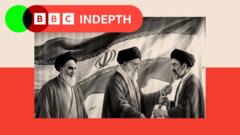
The passing of Ali Khamenei serves as a stark reminder of the significant transformations Iran has undergone. As the nation contemplates its future leadership, a crucial question arises: what are the aspirations and distinct characteristics of the new generation of leaders in Iran compared to those who came before?
This transition period prompts an examination of the potential shifts in domestic and foreign policy, the ideological underpinnings of the new leadership, and their approach to governance. Understanding these differences is key to comprehending the trajectory of Iran in the coming years.
The impending leadership transition in Iran necessitates a dispassionate assessment of potential policy shifts. Evaluating the new leadership's objectives requires analyzing their stated intentions against historical patterns and geopolitical realities. Understanding the interplay between internal power dynamics and external pressures will be crucial for predicting future policy directions. The coming decade will likely test Iran's ability to adapt to evolving global economic and technological landscapes, while navigating complex regional security challenges. This period offers an opportunity to observe how new leadership paradigms may address systemic issues and foster stability.
AI-generated to prompt reflection — not editorial opinion, not advice, not a statement of fact. How this works.