Iran's Post-Khamenei Succession: Revenge Against Trump as a Central Narrative
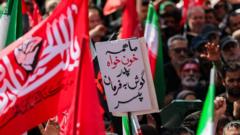
The week-long funeral and burial ceremonies for Ali Khamenei, the former Supreme Leader of the Islamic Republic of Iran, were marked by more than just customary mourning. These events were accompanied by coordinated calls for revenge against Donald Trump, the former President of the United States. This suggests that a narrative of retribution against Trump has become a central element in the Islamic Republic's discourse, particularly as it navigates the post-Khamenei era. The emphasis on revenge indicates a strategic effort to consolidate a particular political identity and potentially rally support around a shared external adversary. The timing of these pronouncements, coinciding with a significant leadership transition, highlights their importance in shaping the future direction of the regime. The calls for vengeance appear to be a deliberate attempt to frame the political landscape and influence public sentiment during a critical period of succession. This focus on an external enemy may serve to distract from internal challenges or to forge a sense of national unity in the face of perceived threats.
The coordinated calls for revenge against Donald Trump during the funeral of Ali Khamenei suggest a strategic utilization of external adversaries to shape domestic political narratives during a critical leadership transition. This approach leverages historical grievances and perceived injustices to foster a sense of national unity and potentially consolidate power in the post-Khamenei era. By focusing on a common enemy, the regime may be seeking to deflect attention from internal challenges and to create a unifying external threat. This tactic, while potentially effective in the short term for rallying support, carries the risk of entrenching a confrontational foreign policy and limiting future diplomatic flexibility. The long-term implications for regional stability and Iran's international relations warrant careful consideration, particularly in the context of evolving geopolitical dynamics and the increasing influence of technological advancements on statecraft.
AI-generated to prompt reflection — not editorial opinion, not advice, not a statement of fact. How this works.