Iran's Regime Uses Soleimani Procession for Political Signaling Amid Public Apathy
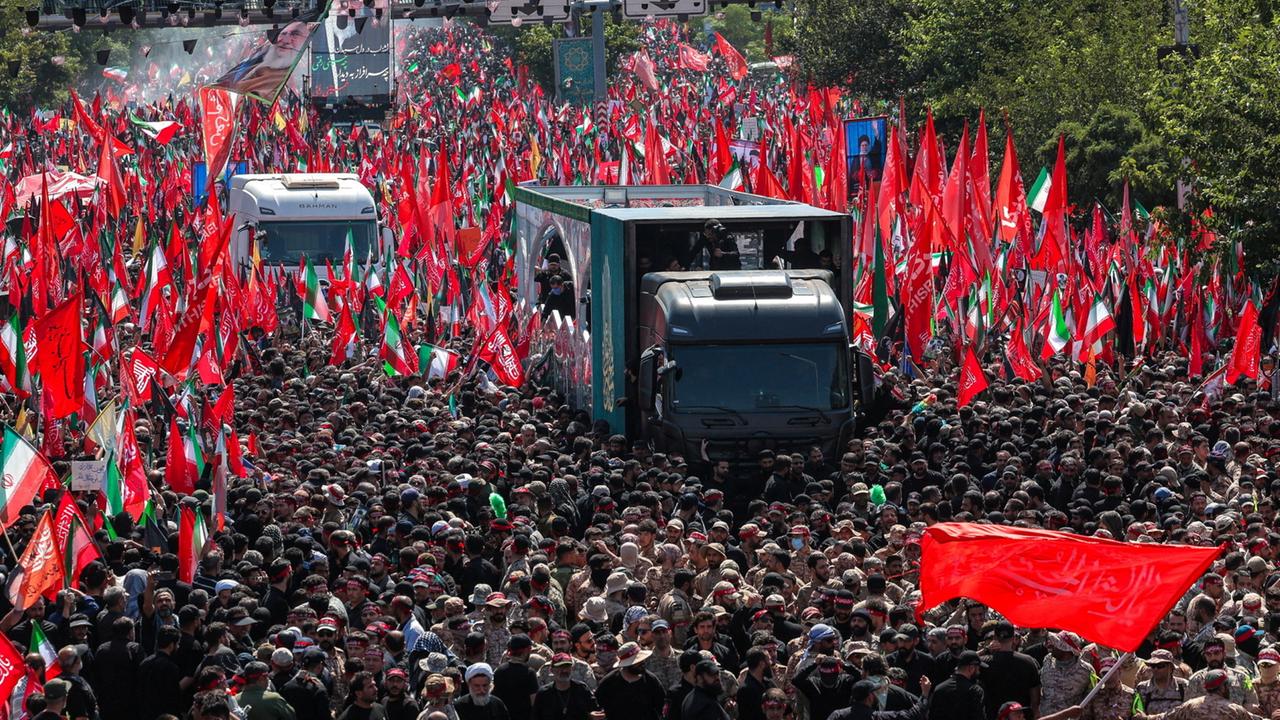
Iran's ruling regime is leveraging the multi-day ceremony for the killed Supreme Leader Qasem Soleimani to send political messages both domestically and internationally. The procession, intended to project strength and unity, appears to be more about political maneuvering than genuine public mourning. Despite the regime's efforts, many people reportedly stayed away from the procession held in Tehran. This public distance suggests a potential disconnect between the government's narrative and the sentiment of a segment of the population. The regime's strategy aims to consolidate its image and influence, but the observed public response indicates challenges in achieving widespread resonance. The event highlights the complex interplay of state-sponsored displays and public sentiment within Iran.
The regime's utilization of Soleimani's funeral procession for political signaling underscores a common statecraft tactic to consolidate power and project an image of national unity during times of internal or external pressure. The reported public apathy suggests that such state-orchestrated displays may not always translate into genuine popular support, potentially reflecting underlying societal divisions or disillusionment. In the context of the evolving geopolitical landscape and the increasing influence of digital information, regimes face the challenge of maintaining narrative control when public sentiment can diverge significantly from official pronouncements. The long-term effectiveness of such strategies will likely depend on the regime's ability to address the root causes of public disengagement, rather than solely relying on symbolic gestures.
AI-generated to prompt reflection — not editorial opinion, not advice, not a statement of fact. How this works.