Iran's Supreme Leader Ayatollah Ali Khamenei Buried in Mashhad
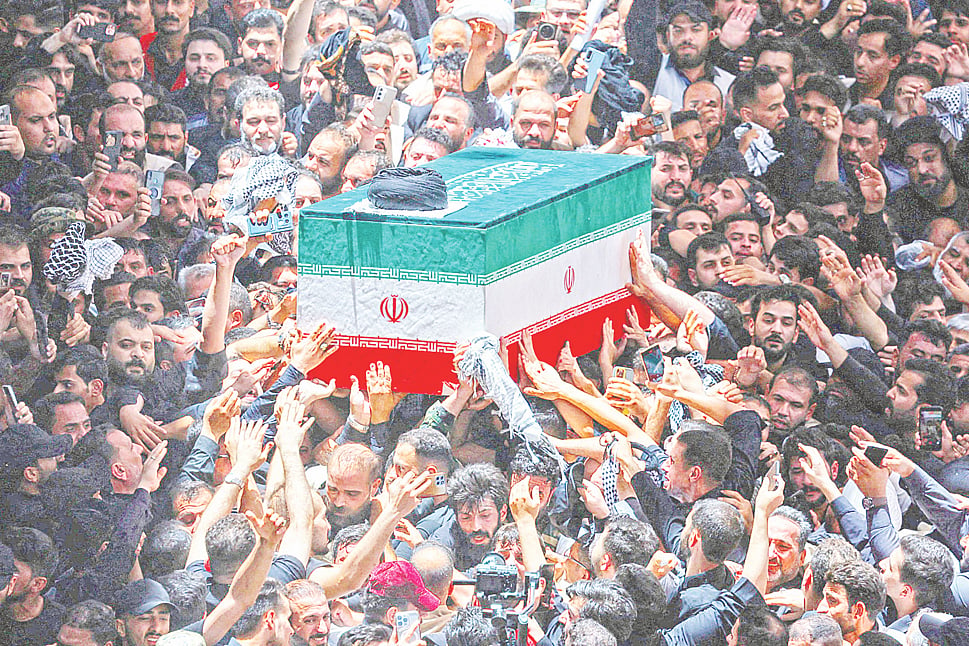
Ayatollah Ali Khamenei, Iran's Supreme Leader, was buried today, Thursday, in his hometown of Mashhad. His burial follows a week of extensive mourning ceremonies across five cities in Iran and Iraq. Khamenei was reportedly killed on February 28, along with four members of his family, in attacks by the United States and Israel. The burial was delayed due to the intensity of the ongoing conflict. The Iranian government decided to proceed with the burial after a memorandum of understanding was signed between Tehran and Washington to permanently end the war.
Mourning events began last Friday, with Khamenei's coffin displayed at the Grand Mosalla in Tehran from Friday to Sunday. On Monday, his body was transported to Qom, Iran, and then flown to Iraq. His final resting place is beside the shrine of Imam Reza in Mashhad. The Iraqi public showed significant respect, with thousands gathering in Najaf and Karbala to bid farewell. One mourner, Mohammad Al-Bayati, stated he could not miss the funeral of someone who stood against the power of the US and Israel. Murtada Al-Maliki, 27, added that Khamenei kept Israel in check. A public holiday was declared in Iraq for Khamenei's funeral procession in Najaf, where crowds gathered to touch his coffin.
Khamenei's passing occurs amidst renewed tensions between Iran and the US. The two nations had previously agreed to a 60-day ceasefire last month, but US President Donald Trump declared the ceasefire over on Tuesday, stating negotiations with Iran were a waste of time. This statement followed recent instability around the Strait of Hormuz, where three ships were attacked. While Iran was blamed, it denied responsibility. In response, US forces attacked dozens of Iranian targets, and Iran retaliated by targeting US military facilities in Bahrain and Kuwait. Khamenei, born in Mashhad in 1939, studied religious sciences there before moving to Qom for higher education. He became Supreme Leader in 1989 after the death of Ayatollah Ruhollah Khomeini.
The reported events highlight the complex geopolitical landscape surrounding Iran, particularly its relationship with the United States and Israel. The narrative of Khamenei's death and subsequent burial, framed by accusations of foreign aggression, serves to consolidate domestic support and potentially rally regional allies against perceived adversaries. The timing of these events, coinciding with the breakdown of a ceasefire and escalating tensions in the Strait of Hormuz, suggests a strategic communication effort to shape public perception and justify future actions. The analysis of such events requires careful consideration of state-sponsored narratives versus verifiable facts, understanding how internal political dynamics and international relations influence the framing of conflict and leadership transitions. The focus on external enemies, while potentially galvanizing, may also obscure underlying domestic challenges or policy trade-offs within Iran.
AI-generated to prompt reflection — not editorial opinion, not advice, not a statement of fact. How this works.