Iran's Supreme Leader: Trump's Signature Worthless Amid Escalating Conflict
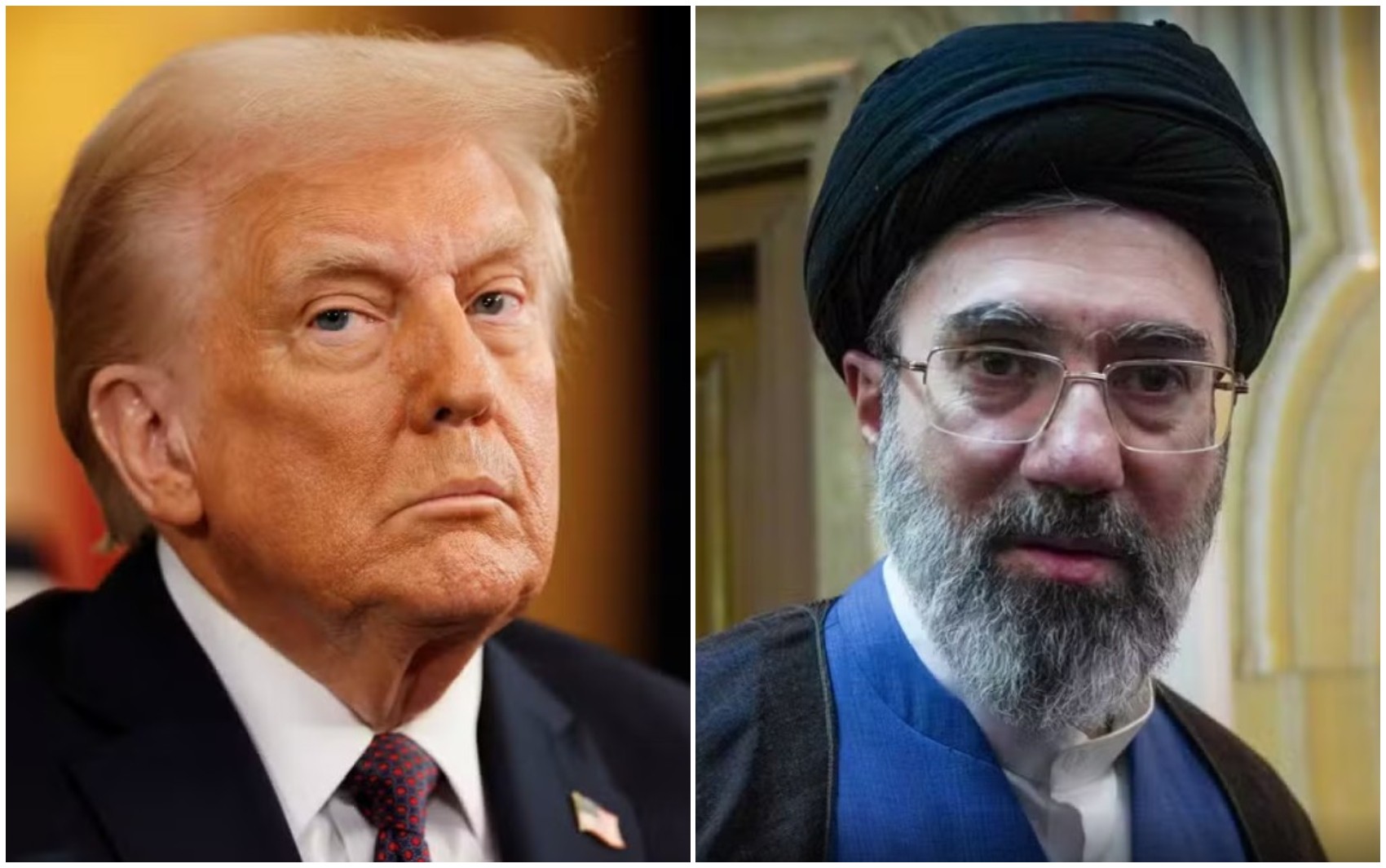
Iran's Supreme Leader, Ayatollah Mojtaba Khamenei, declared on Saturday, January 18th, that the United States has once again violated its commitments made during the Middle East war. He stated that an American president's signature holds no value or credibility, referring to the U.S. as the "Great Satan," a term used by Iranian officials since the 1979 Islamic Revolution. This statement was published on an X account linked to Khamenei's office, criticizing the U.S. for deceptive, treacherous, and brutal conduct.
Khamenei urged national unity amidst the escalating war, emphasizing the importance of unified discourse and sacred union at all levels. He stressed that maintaining cohesion and avoiding divisions is a duty for both authorities and the public, and that political and social differences should not undermine national unity. He also expressed confidence in military commanders working to defend national interests. This declaration follows Iran's announcement that it has suspended its obligations under a temporary peace agreement with Washington signed about a month prior, citing U.S. non-compliance.
Meanwhile, U.S. Central Command (Centcom) reported conducting attacks for the seventh consecutive night on Iranian surveillance facilities, military logistics, weapons depots, and maritime capabilities. Iranian state media reported U.S. airstrikes hit power and desalination plants in Hormozgan province, destroying one desalination plant and damaging another, impacting water supply for approximately 10,000 people. Attacks also targeted infrastructure near Bandar Abbas port. Conversely, Iran has intensified attacks on regional countries, with Kuwait reporting missile strikes on oil and desalination facilities, causing injuries and fires. Iran's actions have also led to temporary airspace closures and air defense activations in Iraq, Jordan, Bahrain, and Saudi Arabia.
The conflict has heightened tensions around the Strait of Hormuz, a critical global oil transit route. Iran's restrictions on maritime traffic and demands for exclusive control have significantly reduced ship circulation and pressured oil prices. In response, former U.S. President Donald Trump threatened attacks on Iranian infrastructure and reinstated a naval blockade. Nuclear negotiations between Washington and Tehran have been halted due to the military escalation, with no immediate prospect of a ceasefire.
The exchange between Iran and the United States highlights the volatile geopolitical dynamics and the erosion of trust in international agreements, particularly within conflict zones. The rhetoric employed, such as labeling the U.S. the "Great Satan," reflects deep-seated historical animosities and serves to galvanize domestic support by framing external actions as existential threats. The reciprocal military actions and accusations of treaty violations underscore a cycle of escalation, where each side perceives the other's moves as provocations justifying their own responses. This pattern suggests that diplomatic channels may be strained, and future de-escalation efforts will require significant third-party mediation or a fundamental shift in the strategic calculus of both nations. The focus on infrastructure, including vital resources like desalination plants, indicates a potential for widespread humanitarian impact, raising concerns about systemic vulnerabilities beyond direct military engagement.
AI-generated to prompt reflection — not editorial opinion, not advice, not a statement of fact. How this works.