Iran's Youth: A Post-War Gamble on National Identity and Shifting Social Norms
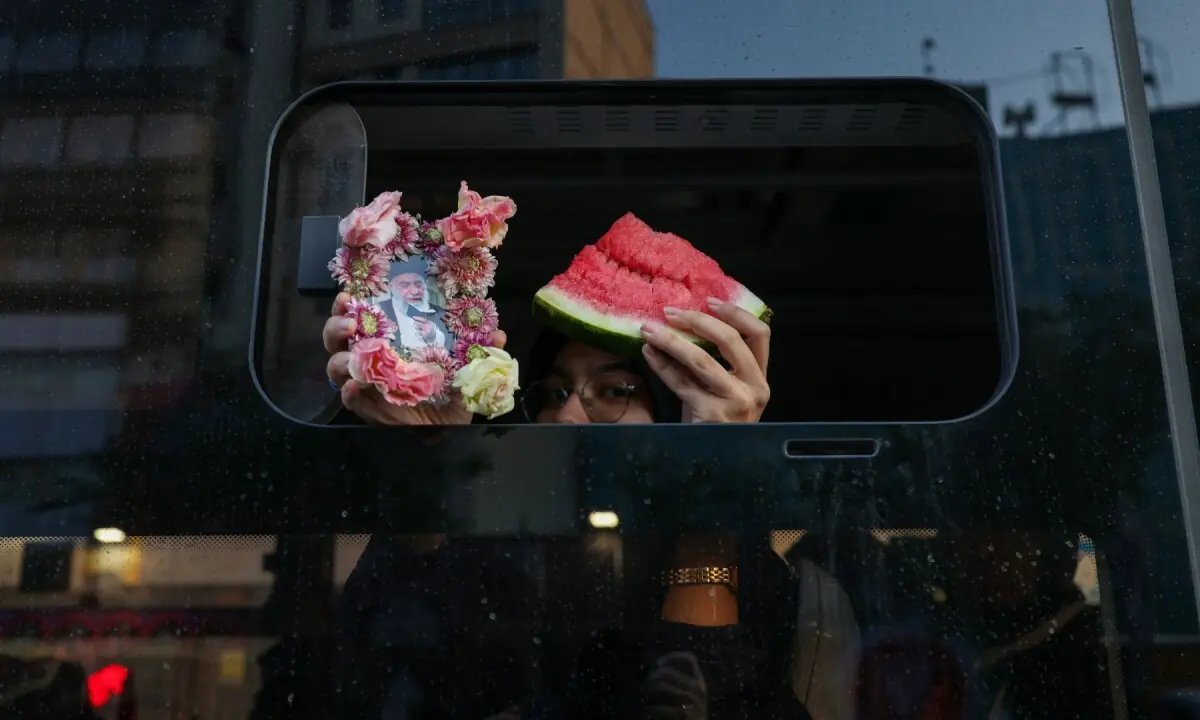
Following the assassination of Supreme Leader Ayatollah Ali Khamenei on February 28 and subsequent retaliatory actions against Iran by the US and Israel, the nation experienced a surge in collective grief and nationalistic fervor. State-orchestrated funeral proceedings in July showcased unity and continuity, aiming for both domestic consolidation and international perception. However, in the days following the funeral, a noticeable shift occurred in the public sphere, with art galleries reopening and younger Iranians exhibiting more relaxed dress codes and social behaviors. This relaxation of restrictions, including the suspension of the morality police following the 2022 Mahsa Amini protests, suggests a strategic recalibration by the government to engage the younger generation. Despite the theocratic system's ideological tenets, there's a deep-seated connection to Iranian culture and a millennia-old civilizational pride that the clergy has learned to accommodate. Young Iranians, like activist Maryam Rezaei and shop owner Mohammad Mehdi, express a strong defense of their heritage against perceived external threats, asserting national resilience. Paradoxically, the same digitally native generation that fueled anti-regime protests earlier in the year has now rallied around the state, viewing the government as a protector of their history and civilization against foreign aggression. The government faces the challenge of managing this youth demographic, whose social values may diverge from the regime's ideology, potentially by separating lifestyle freedoms from political freedoms while increasing digital and physical surveillance. The Islamic Revolutionary Guard Corps (IRGC) has emerged as a key guarantor of national survival, potentially consolidating its power and resources, similar to its post-Iran-Iraq War ascendancy, as it navigates social control as an operational necessity.
The narrative presents a complex interplay between state-driven nationalism, historical civilizational pride, and evolving youth social norms in Iran. The external conflict with the US and Israel appears to have served as a catalyst, temporarily unifying a populace that previously exhibited significant internal dissent. This external threat has seemingly been leveraged by the state to bolster national identity and rally support, potentially overshadowing domestic grievances. The observed relaxation of social strictures, particularly concerning youth behavior and dress codes, could represent a strategic concession by the regime to maintain stability and co-opt younger generations. However, this approach risks creating a dichotomy between lifestyle freedoms and political expression, a delicate balance that may prove unsustainable. The ascendance of the IRGC as a guarantor of national survival, mirroring past trends during security crises, suggests a potential shift in power dynamics within the regime, with implications for future governance and the clergy's influence. The long-term viability of this strategy hinges on whether the state can effectively manage the inherent tensions between its ideological foundations and the aspirations of a globally connected youth demographic, particularly in the digital age.
AI-generated to prompt reflection — not editorial opinion, not advice, not a statement of fact. How this works.