Iran Strikes US Targets in Bahrain, Kuwait in Retaliation
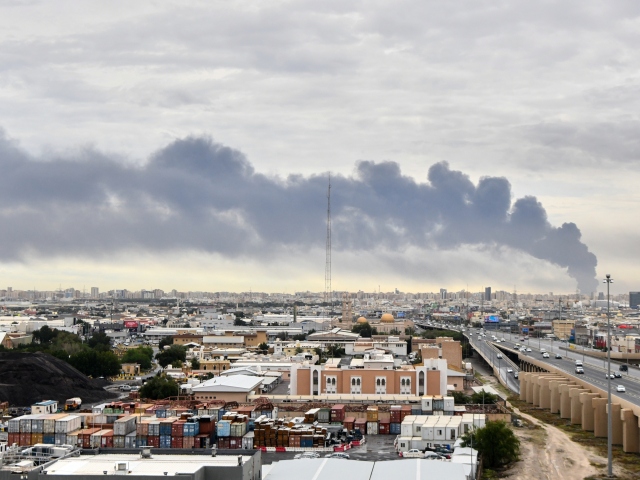
Iran's Islamic Revolutionary Guard Corps (IRGC) announced on Wednesday that it had attacked 85 American military targets in Bahrain and Kuwait. This action was declared a response to alleged "ceasefire violations" by the United States. The US reportedly conducted strikes in southern Iran during the night. The IRGC's statement indicates a significant escalation of tensions in the Persian Gulf region. This retaliatory move follows recent US actions within Iranian territory. The situation highlights the volatile security environment in the Persian Gulf. Both nations are key players in the region, and their actions have broad implications. Further developments are anticipated as the situation unfolds.
The IRGC's stated response to US strikes in southern Iran, targeting American military installations in Bahrain and Kuwait, represents a direct escalation in the ongoing geopolitical friction. This action highlights the asymmetric capabilities and strategic calculus employed by Iran, leveraging its regional influence to project power in response to perceived provocations. The IRGC's declaration frames the engagement as a defensive measure against alleged US ceasefire violations, a narrative that seeks to legitimize its actions within a framework of national security. From a systemic perspective, such tit-for-tat escalations risk destabilizing the broader regional security architecture, potentially drawing in other actors and increasing the likelihood of miscalculation. The long-term implications for regional stability and international energy markets will depend on the de-escalatory responses, or lack thereof, from both the United States and its allies in the coming days and weeks.
AI-generated to prompt reflection — not editorial opinion, not advice, not a statement of fact. How this works.