Iran-US conflict escalates, threatening global economy and Asian markets
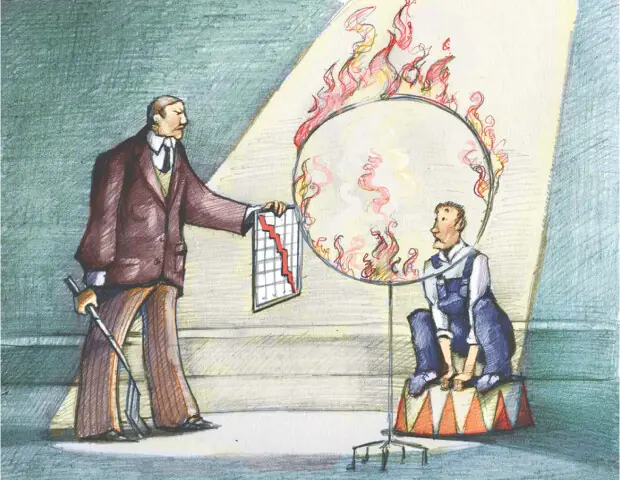
A fragile ceasefire between the US and Iran, initially announced on June 14 to end a conflict within sixty days, has collapsed, leading to renewed hostilities. This escalation has expanded the war beyond the two nations, drawing in regional countries and armed militias, and spilling over into the Red Sea and Caspian Sea. The conflict's widening scope is a significant concern, as global institutions like the IMF, World Bank, and OECD have downgraded global growth forecasts, citing geopolitical uncertainty and inflation risks. The International Energy Agency warns of oil market volatility impacting global energy security and investment. The primary transmission channel for this economic disruption is energy, with a substantial portion of global oil trade passing through the Strait of Hormuz and Bab el-Mandeb. Disruptions to oil and gas supplies from the Gulf region lead to immediate increases in crude prices, affecting transport, manufacturing, and electricity costs worldwide, and subsequently impacting fertilizer and food production. Developing economies, already burdened by debt and weak currencies, are disproportionately affected by these commodity price spikes. Pakistan's economy, despite recent growth, has been impacted by the conflict, with Finance Minister Muhammad Aurangzeb attributing a slowdown in GDP growth to Middle East instability. The State Bank of Pakistan raised its policy rate to 11.5% due to oil-driven inflation, and acknowledges that further shocks could reverse progress. While Pakistan's current account deficit has narrowed and reserves have improved, they are insufficient to fully shield the economy from a sustained oil price shock. A prolonged closure of key waterways would widen the trade deficit, pressure the currency, and deplete reserves. Both households and businesses face higher fuel prices, increasing costs for essential goods and services, while governments are forced to choose between worsening inflation or widening fiscal deficits. The ongoing escalation poses a severe threat to global manufacturing centers and fast-growing markets, with Washington and Tehran holding a responsibility that extends beyond their confrontation due to the widespread ripple effects on inflation, interest rates, food prices, and industrial output across continents. The current trajectory indicates no immediate return to peace, making the reversal of the conflict's momentum increasingly difficult.
The escalating conflict between the US and Iran, initially intended to be resolved by a June 14 memorandum, has devolved into a wider regional war with significant global economic repercussions. The initial hope for a swift resolution has been dashed, illustrating the inherent fragility of peace agreements when underlying geopolitical tensions remain unresolved. The conflict's expansion beyond its original belligerents, drawing in regional actors and impacting critical global trade routes like the Strait of Hormuz, demonstrates how localized disputes can rapidly metastasize into systemic global risks. International financial institutions' revised growth forecasts underscore the interconnectedness of the global economy, where energy supply disruptions translate into inflation, impacting developing nations most severely. The situation highlights a critical governance challenge: how to de-escalate conflicts that have become too complex and multi-faceted to contain, and how to mitigate their economic fallout on vulnerable populations. The narrative of escalating hostilities suggests a failure of diplomatic mechanisms to manage the conflict's trajectory, potentially leading to a prolonged period of global economic uncertainty and increased costs for essential goods.
AI-generated to prompt reflection — not editorial opinion, not advice, not a statement of fact. How this works.
