Iranian Interior Minister Meets Pakistan's PM Amidst Escalating US-Iran Conflict
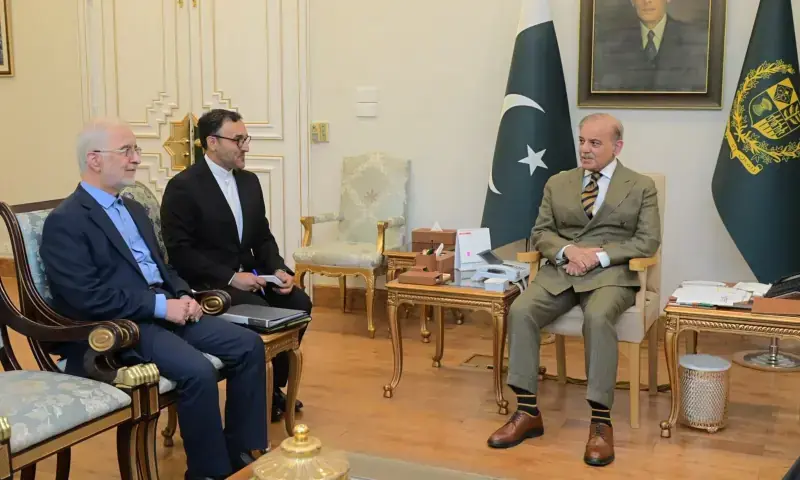
Iranian Interior Minister Eskandar Momeni met with Pakistani Prime Minister Shehbaz Sharif in Islamabad on Tuesday. Momeni, who arrived in Pakistan on Monday night with a high-level delegation, was received by Interior Minister Mohsin Naqvi. The meeting at the PM House was confirmed via an X post from the Prime Minister's Office, though further details were not immediately available. State-run Pakistan TV reported that Momeni is also scheduled to meet Chief of Defence Forces and Chief of the Army Staff Field Marshal Syed Asim Munir during his official visit. This visit occurs as Pakistan continues diplomatic efforts concerning the Islamabad Memorandum of Understanding (MoU), a ceasefire agreement between the US and Iran that has recently collapsed. Hostilities between the US and Iran resumed following US-Israeli attacks on Iran in late February, with the US conducting strikes for the tenth consecutive day and Iran targeting US installations in the Gulf. Both US President Donald Trump and Iranian President Masoud Pezeshkian have declared the situation a "full-scale war" after the breakdown of the ceasefire, with Tehran accusing Washington of breaching the MoU. Despite the ongoing conflict, Iran's foreign ministry stated that diplomatic exchanges are continuing through mediators. In response to the collapsed truce, Tehran has reimposed its blockade of the Strait of Hormuz, while Washington has blockaded Iranian ports. Adding another dimension to the conflict, Yemen's Houthi rebels announced an immediate maritime embargo on Saudi Arabia, which Saudi Arabia's foreign ministry condemned.
This high-level diplomatic engagement between Iran and Pakistan occurs against a backdrop of rapidly escalating conflict between the United States and Iran, and a broader regional destabilization involving Houthi rebels. The breakdown of the Islamabad Memorandum of Understanding highlights the fragility of negotiated de-escalation in a complex geopolitical environment. Pakistan's role as a mediator underscores the persistent demand for diplomatic channels, even amidst overt hostilities. The reciprocal blockades of strategic waterways and the expansion of conflict fronts suggest a dangerous escalation spiral, driven by perceived breaches of agreements and retaliatory actions. Future diplomatic efforts will likely grapple with rebuilding trust and establishing verifiable mechanisms to prevent further escalation, while regional actors navigate the consequences of shifting security dynamics.
AI-generated to prompt reflection — not editorial opinion, not advice, not a statement of fact. How this works.