Iranians Burn Giant Lego Trump Effigy During Funeral Procession for Ali Khamenei
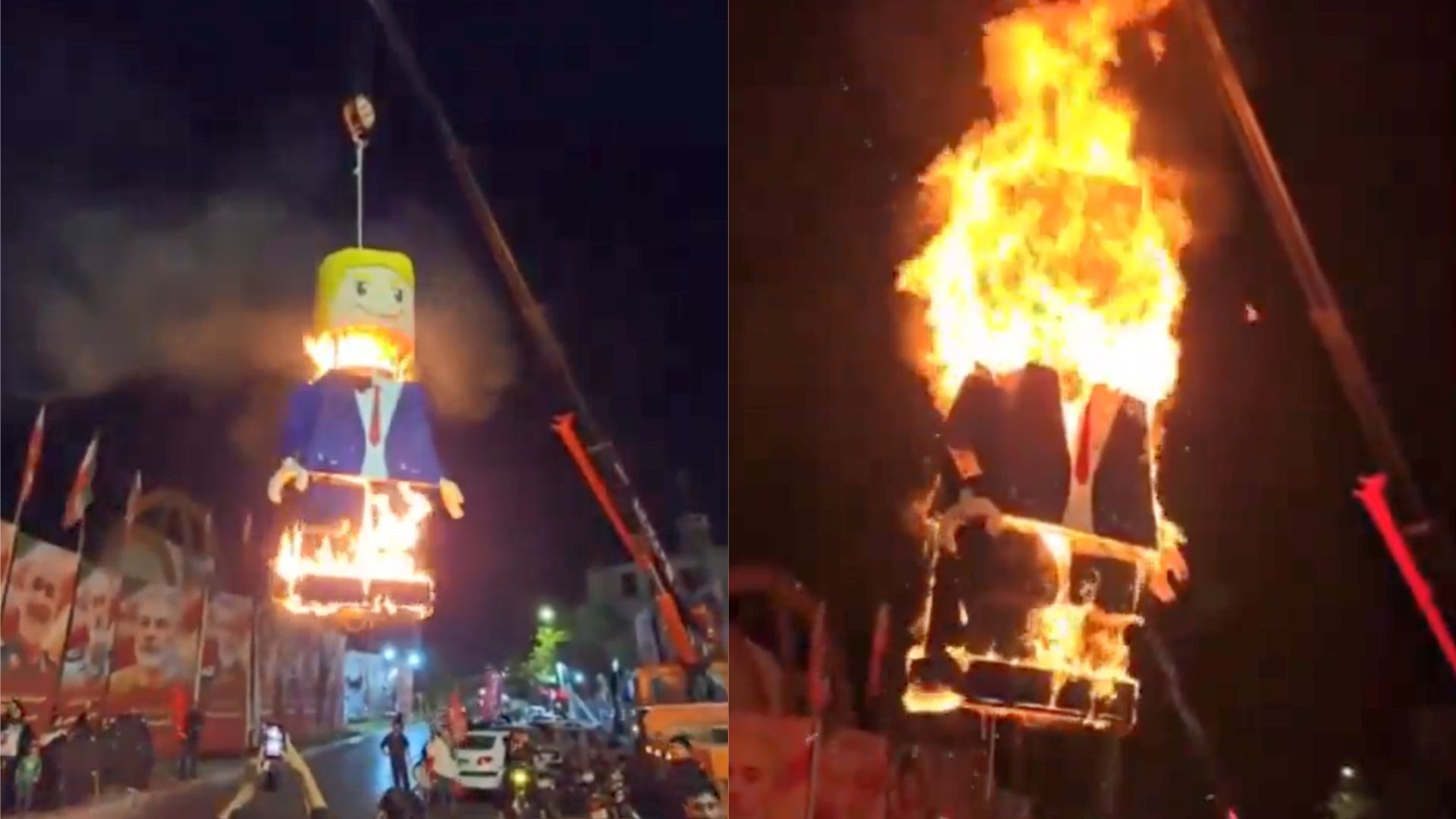
During the public funeral procession for former supreme leader Ali Khamenei in Mashhad, Iran, on Thursday, July 9, 2026, Iranians set fire to a giant Lego effigy depicting U.S. President Donald Trump. State news agency PressTV shared footage of the event, where the Trump effigy, hoisted by a crane, was ignited at its feet and eventually collapsed in flames. This incident occurred amidst chants of "death to Trump" and displays of similar messages during Khamenei's funeral ceremonies held across Iranian cities including Tehran, Qom, and Mashhad. Khamenei's body had been preserved for four months following his death in a U.S. and Israeli airstrike on February 28, the first day of the war. The funeral proceedings concluded on Thursday with his burial in the holy city. Separately, U.S. media reported on Thursday that Israel had provided intelligence to the U.S. regarding a specific, new Iranian plot to assassinate Trump. These reports emerged amid renewed fears of escalating conflict following recent attacks between the U.S. and Iran. The U.S. had been monitoring intelligence on potential assassination plans against Trump, but Israel's alert highlighted a distinct conspiracy. Iran has publicly vowed revenge against Trump for his decision to order the assassination of Iranian General Qasem Soleimani in January 2020.
This event highlights the potent symbolism employed in geopolitical tensions, where public displays of animosity, such as burning an effigy, serve as a visceral expression of state-sponsored grievances and popular sentiment. The use of a Lego effigy, a material typically associated with childhood and play, juxtaposed with the violent act of burning, underscores the complex and often theatrical nature of international political messaging. The timing of this demonstration during a national mourning period, coupled with intelligence reports of a specific assassination plot against Donald Trump, suggests a coordinated effort to amplify anti-American and anti-Israeli sentiment. From a systems perspective, such actions reflect a strategic communication approach designed to mobilize domestic support and project defiance on the international stage, while simultaneously creating an environment of heightened risk and uncertainty for targeted individuals and nations. The interplay between state media dissemination, public demonstrations, and intelligence sharing illustrates the multifaceted dimensions of modern geopolitical conflict, where narrative control and symbolic acts are as crucial as conventional military or economic pressures.
AI-generated to prompt reflection — not editorial opinion, not advice, not a statement of fact. How this works.