Iranians Mourn Supreme Leader Khamenei with Vows of Retribution
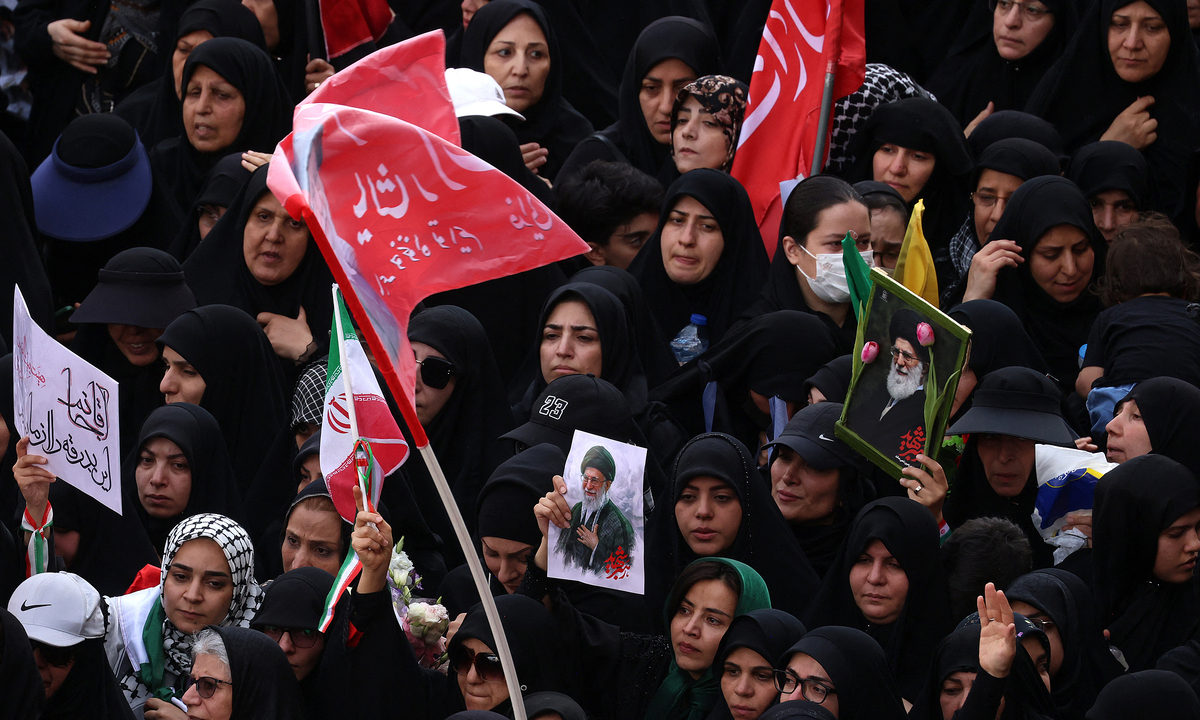
Thousands of Iranians gathered in Tehran to mourn the passing of Supreme Leader Ali Khamenei. During the funeral procession, mourners engaged in ritual chest-beating and waved "blood flags" while chanting slogans demanding retribution. The somber ceremony reflected the deep respect and emotional outpouring from the populace following the loss of their long-standing leader. The display of "blood flags" is a traditional symbol of mourning and a call for vengeance in Iranian culture. The event underscored the significant influence Khamenei held within the nation and the profound impact his death has on the country's political and social landscape. The chants for revenge suggest a desire for continued adherence to his legacy and policies, potentially signaling a period of national introspection and resolve.
The public display of grief and calls for retribution following the passing of a national leader like Ali Khamenei are common expressions of collective mourning and loyalty within many societies. Such events often serve to reinforce national identity and the continuity of political ideology. From a systems perspective, the fervor observed can be seen as a mechanism for consolidating public support around a successor or a particular political direction, potentially mitigating immediate instability. The invocation of "blood flags" and vengeance, while emotionally charged, can be interpreted as a cultural expression of commitment to the deceased's principles and a desire to uphold the established order against perceived external or internal threats. The challenge for Iran's leadership will be to channel this collective energy constructively, ensuring stability and progress in the post-Khamenei era, while navigating the complex geopolitical landscape.
AI-generated to prompt reflection — not editorial opinion, not advice, not a statement of fact. How this works.