Islamic Movement Leader Claims July Coup Aimed to Oust Conspirators Selling Off the Country
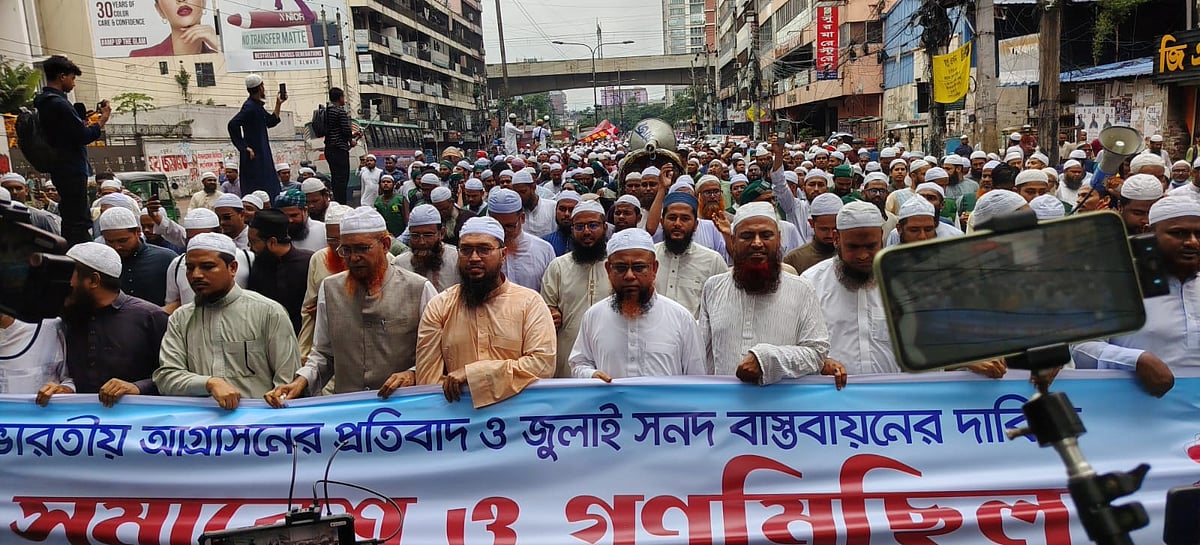
Syed Muhammad Faizul Karim, Senior Nayeb-e-Amir of Islami Andolan Bangladesh, stated that the July coup was not solely to remove fascism but to overthrow those conspiring to sell off the country. He asserted that the implementation of the July Charter is a public expectation, given the sacrifices of life, blood, and disability made by citizens to protect the nation. Karim made these remarks as the chief guest at a rally organized by Islami Andolan Bangladesh's Dhaka Metropolitan North and South units outside the north gate of Baitul Mokarram National Mosque in Dhaka on Friday. Following the rally, the party announced in a press release that a procession was taken out to protest Indian aggression and demand the implementation of the July Charter. Karim also criticized the Home Minister for dismissing statements about dividing and conquering the country as mere slips of the tongue, alleging that a new 'militant drama' is being staged to target Islamists, scholars, and madrasas, using militancy as a weapon. He claimed that militancy is not a Bangladeshi culture but an Indian one and called for an end to this 'militant game.' Criticizing statements from various Indian political leaders, Karim warned the public to be vigilant against any Indian conspiracies, especially concerning the concept of 'Akhand Bharat' (undivided India) which he believes poses a threat to Bangladesh and its neighbors. He also emphasized that violence in the name of religion is unacceptable. Islami Andolan Bangladesh's Secretary General, Gazi Ataur Rahman, echoed that the July Revolution was against Indian aggression and demanded an explanation for a statement made by the Indian High Commissioner to Bangladesh. He affirmed public support for the July Charter and urged the government to take effective action. Sheikh Fazle Bari Masud, President of Dhaka Metropolitan North, concluded by stating that some leaders have prioritized foreign interests over national ones since independence and after the 2024 popular uprising, arguing that loyalty to imperialist powers, not the people, prevents national welfare.
The narrative frames the "July coup" as a patriotic uprising against internal conspirators and external aggression, specifically targeting Indian influence and the concept of "Akhand Bharat." This framing positions the "July Charter" as a nationalistic demand. The analysis of alleged "militant dramas" and the attribution of militancy to Indian culture serve to delegitimize certain political elements and foreign policy orientations. The discourse emphasizes national sovereignty and resistance to perceived foreign dominance, particularly from India, while also advocating for religious identity and the protection of Islamic institutions. The call for vigilance and the rejection of violence in the name of religion present a complex stance, balancing assertive nationalistic sentiment with a stated commitment to peace and religious integrity. The underlying incentive structure appears to be consolidating political support by appealing to nationalistic and religious sentiments, while simultaneously creating an adversarial relationship with perceived external threats and internal political opponents.
AI-generated to prompt reflection — not editorial opinion, not advice, not a statement of fact. How this works.