Ismail Sadi's 'Tin Shobder Chokh' Blends Classicism with Contemporary Concerns
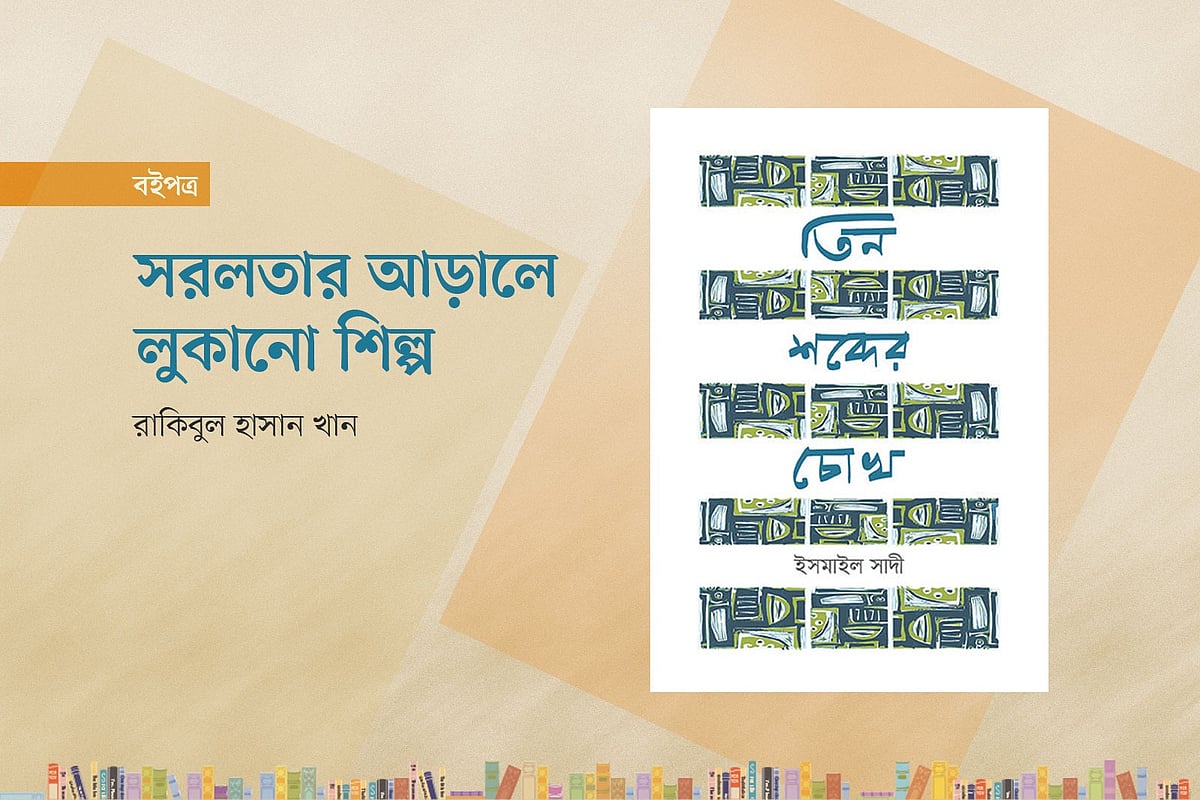
Ismail Sadi's debut poetry collection, 'Tin Shobder Chokh' (Three Word Eyes), published in February 2026 by Onindyo Prokash, offers a unique blend of classic poetic sensibilities and contemporary themes. The title itself, deceptively simple, hints at the profound depth within Sadi's verses. While appearing straightforward, the poems possess an artistic complexity that draws the reader into deeper contemplation, a characteristic described as 'deceptive simplicity.' Sadi's work stands out in the era of free verse by embracing traditional rhythm and musicality, a choice that reflects his deep engagement with research and vocal practice. His command of meter and word selection is presented as an innate artistic skill, though this adherence to classical form may pose a challenge for some contemporary readers. Sadi also takes a risk by favoring poetic and refined language over everyday vocabulary, reintroducing a classic, timeless quality to poetry at a time when many poets are blurring the lines between poetry and prose. The collection features a sonnet sequence in its second part, reminiscent of Al Mahmud's 'Sonali Kabin,' exploring themes of love, memory, and the passage of time. Beyond romantic themes, Sadi addresses political and social crises, environmental devastation, and the impact on natural elements like rivers, as seen in the poem 'Dholeshwari.' His poetry, while rooted in older Bengali literary traditions, offers thoroughly contemporary insights into the struggles of a sensitive individual confronting injustice and misrule. The collection also delves into primal human desires and emotions, exemplified in poems like 'Anurag' and 'Motihar,' which evoke nostalgia and deep feeling through vivid imagery and masterful language. Despite a long involvement with literature and recitation, the delayed publication of this first collection suggests Sadi's readiness to share his artistic vision, shaped by his experiences, observations, and historical and political awareness.
Ismail Sadi's 'Tin Shobder Chokh' navigates the tension between poetic classicism and contemporary relevance. By re-emphasizing traditional meter and elevated language, Sadi challenges prevailing trends that favor prosaic directness. This stylistic choice, while potentially alienating some readers accustomed to experimental forms, serves to re-center the aesthetic and lyrical dimensions of poetry. His engagement with socio-political and environmental issues, framed through a classicist lens, suggests an attempt to imbue urgent contemporary concerns with a timeless gravitas. The collection's exploration of human emotion, from romantic ardor to existential reflection, indicates a broader ambition to connect enduring human experiences with the specific challenges of the present era. The success of this approach will likely depend on how effectively the inherent stylistic risks are balanced with the accessibility of his thematic concerns for a modern audience.
AI-generated to prompt reflection — not editorial opinion, not advice, not a statement of fact. How this works.