Israel Bombs Gaza Mosque, Citing Hamas Weapons Storage
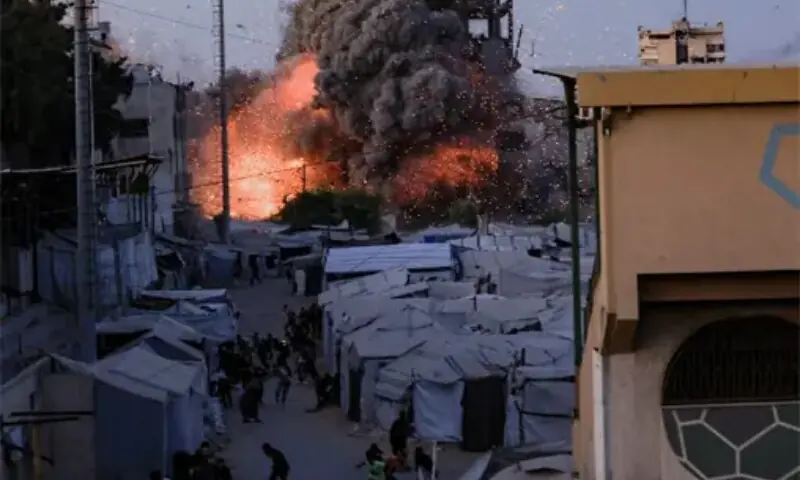
The Israeli military acknowledged on Wednesday that it conducted an airstrike on the Al-Muttaqin Mosque in the Gaza Strip, claiming the site was used by Hamas for weapons storage. Images from the scene depicted a large fireball and smoke plume following the strike, which occurred near the Young Men’s Christian Association (YMCA) building and tents housing displaced Palestinians. Extensive rubble and debris covered the area in the attack's aftermath. Amir Abu Al-Amrain, director general of Gaza's ministry of awqaf and religious affairs, stated that Israeli forces "completely destroyed" the mosque and dismissed Israel's claims as "false pretexts" to justify "crimes." He urged immediate action to safeguard religious sites. According to the UN's cultural agency Unesco, as of March 24, 2026, 164 sites in Gaza have been verified as damaged since the war began, including 14 religious sites. Reporting from Deir el-Balah, Al Jazeera's Tareq Abu Azzoum noted Israeli airstrikes targeted central and northern Gaza, with a "very narrow window" of warning for civilians. An eyewitness described continuous daily attacks, stating, "They threaten and strike, whether it's civilian vehicles or anything else they bomb." In a separate incident, one person was killed and at least 20 injured when Israel struck a group of Palestinians in the Nuseirat refugee camp. Meanwhile, eight Palestinians were displaced from their home near Bethlehem after Israeli settlers allegedly set fire to their building, vandalized a car, and sprayed graffiti.
The Israeli military's assertion of a mosque being used as a weapons depot presents a complex challenge in distinguishing military necessity from civilian harm. The destruction of religious sites, regardless of alleged military use, raises significant questions about proportionality and adherence to international humanitarian law. The incident underscores the critical need for robust verification mechanisms and transparent accountability for actions impacting civilian infrastructure and cultural heritage. Future conflict resolution frameworks must prioritize de-escalation and the protection of non-combatant spaces to mitigate the long-term societal and political consequences of such destruction.
AI-generated to prompt reflection — not editorial opinion, not advice, not a statement of fact. How this works.