Israel Demolishes Gaza Tunnel, Citing Hamas Involvement Amid Rising Tensions
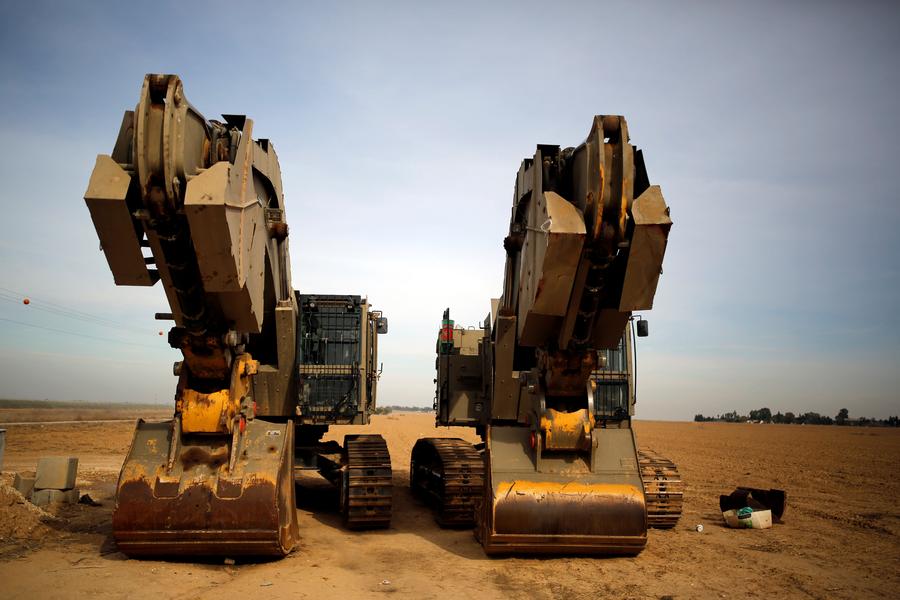
The Israeli military announced on Sunday, December 10, 2017, the destruction of a significant tunnel originating from the Gaza Strip and extending into Israeli territory. According to Israeli intelligence, the tunnel was constructed by Hamas, the dominant Islamist group governing Gaza. The tunnel began in Khan Younis in southern Gaza and reached near Israeli military positions close to Kibbutz Nirim, a community adjacent to the Gaza border fence. Israeli Defense Forces (IDF) Spokesman Brigadier Ronen Manelis stated that the tunnel was discovered weeks prior and monitored until its neutralization, which he described as a serious blow to Hamas's tunnel project and a grave violation of Israeli sovereignty. This demolition follows a similar incident on October 30, when another cross-border tunnel was destroyed, resulting in the deaths of at least 14 Islamic Jihad militants. The IDF indicated a different, less publicized method was used for the recent tunnel's neutralization. The event occurs amid heightened regional tensions, particularly following U.S. President Donald Trump's recent declaration recognizing Jerusalem as Israel's capital and his plan to relocate the U.S. embassy. Over the preceding weekend, Israel conducted strikes on Hamas targets in Gaza in response to three rockets fired into Israel, which caused no injuries but one landed near an empty kindergarten. These Israeli strikes reportedly resulted in at least two fatalities in Gaza, according to local media. Israel has maintained a blockade on Gaza since Hamas won elections there in 2007, following Israel's seizure of the territory in the 1967 Middle East war.
The demolition of the Gaza tunnel by Israeli forces highlights the persistent security challenges and the ongoing strategic competition between Israel and Hamas. This incident, occurring in the context of regional geopolitical shifts like the U.S. recognition of Jerusalem, underscores the complex interplay of security concerns, territorial disputes, and political signaling. The emphasis on Hamas's alleged role and the framing of the tunnel as a "terror" threat serve to legitimize Israel's defensive actions and reinforce its security narrative. Conversely, Hamas's continued investment in such infrastructure, despite Israeli countermeasures and the blockade, suggests a strategic imperative to maintain asymmetric capabilities. The differing methods of neutralization, with the recent operation being "quiet," may indicate an evolving approach to managing these subterranean threats while minimizing escalation. The situation reflects a cycle of action and reaction, where security incidents are amplified by broader political dynamics, posing continuous challenges for regional stability and diplomatic resolution.
AI-generated to prompt reflection — not editorial opinion, not advice, not a statement of fact. How this works.