Israel Demolishes Hezbollah Underground Stronghold with 700 Tons of Explosives
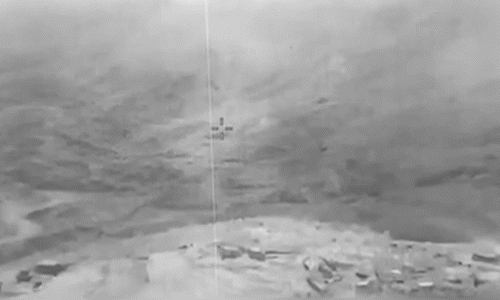
The Israeli military announced that it used 700 tons of explosives to demolish a facility described as an underground fortress belonging to Hezbollah. This operation took place on the slopes of Mount Beaufort in southern Lebanon. The site was considered a significant stronghold for the militant group. The demolition represents a major strike against Hezbollah's infrastructure in the region. The sheer quantity of explosives used underscores the perceived importance of the target and the scale of the operation. This action is part of the ongoing conflict and tensions between Israel and Hezbollah. The destruction of this underground facility is likely to have implications for Hezbollah's operational capabilities in southern Lebanon.
The Israeli military's use of a substantial explosive charge to neutralize a Hezbollah underground facility highlights the evolving nature of asymmetrical warfare. Such actions aim to degrade enemy capabilities by targeting hardened infrastructure, a strategic imperative in densely populated or geographically challenging terrains. The significant expenditure of resources, both in terms of explosives and the potential for collateral impact, raises questions about the long-term efficacy and cost-benefit of such destructive approaches versus alternative containment or neutralization strategies. Future conflict dynamics may increasingly emphasize precision, intelligence-driven operations, and potentially non-kinetic means to achieve strategic objectives while minimizing destructive footprints and escalation risks.
AI-generated to prompt reflection — not editorial opinion, not advice, not a statement of fact. How this works.