Israel Expands Gaza Encroachment Beyond Agreed Ceasefire Line, BBC Reports
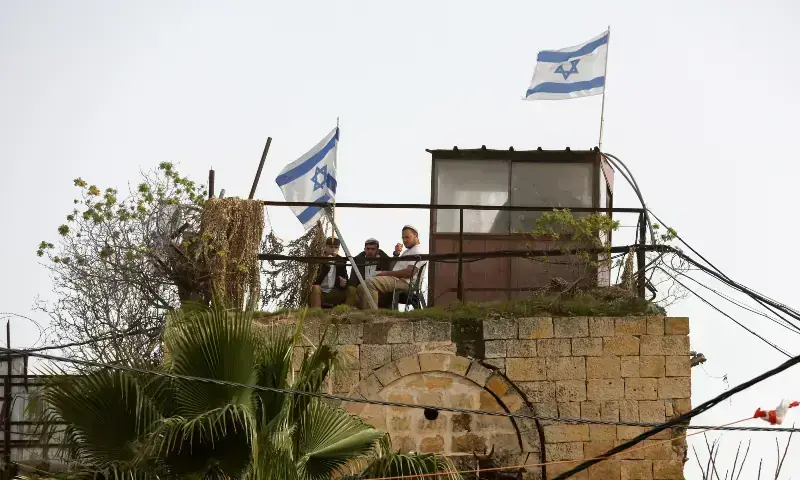
Israeli military forces are reportedly expanding earth barriers and shifting demarcation markers deeper into the Gaza Strip, moving beyond the "Yellow Line" established under an October ceasefire agreement. This expansion, documented by BBC News through satellite imagery and on-the-ground evidence, includes razing olive groves and demolishing buildings beyond the agreed-upon boundary. Initially, Israel controlled approximately 53% of Gaza's territory, but Prime Minister Benjamin Netanyahu has indicated intentions to increase this to 70%. The Israeli Defense Forces (IDF) describe the barrier construction as a defensive measure to prevent infiltrations, declining to specify the exact route for operational security. However, physical evidence shows barriers extending significantly past the Yellow Line, with some sections reaching over 1.5 kilometers beyond it. This encroachment has led to renewed evacuations of displaced Palestinian families, particularly in areas like al-Tuffah and Zeitoun, where residents have been forced to flee their temporary shelters. The United Nations Office for the Coordination of Humanitarian Affairs (UN-OCHA) has reported that dozens of families have lost their shelters due to these evacuations. The BBC's analysis of satellite imagery and video confirms land clearing and destruction of structures in multiple Gaza locations, including Khan Yunis, Deir al-Balah, Rafah, Jabalia, and Beit Lahia. The military has also established 14 new positions and expanded seven existing sites along the boundary since the ceasefire, further restricting the movement and living conditions of Gaza's over two million displaced residents.
The reported expansion of Israeli barriers into Gaza beyond the "Yellow Line" raises questions about adherence to the October ceasefire agreement and its implications for long-term occupation dynamics. While the IDF cites defensive imperatives, the physical evidence suggests a territorial expansion that could impact Palestinian displacement and access to resources. This situation highlights the tension between security objectives and humanitarian concerns, particularly for a population already facing severe restrictions. Future developments will likely depend on international diplomatic pressure, the effectiveness of monitoring mechanisms, and the evolving strategic calculus of all parties involved. The consistent, incremental nature of such territorial adjustments, if proven, could represent a strategic approach to altering the de facto control over disputed territory over time, potentially complicating future resolution efforts.
AI-generated to prompt reflection — not editorial opinion, not advice, not a statement of fact. How this works.