Israeli media and analysts turn on Trump, comparing him to appeasers of Hitler
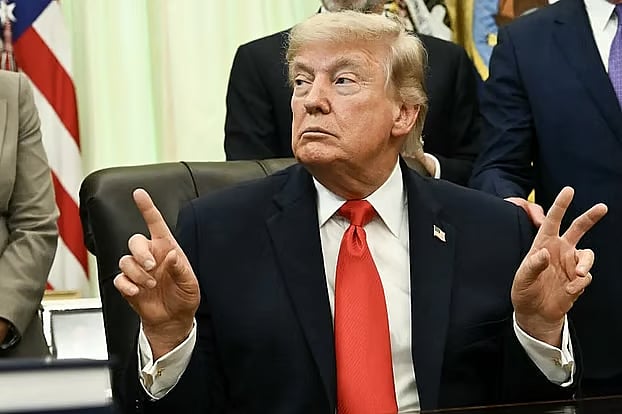
Prominent Israeli media figures and political analysts have dramatically shifted their stance on former U.S. President Donald Trump, with some now viewing him with intense animosity. Influential figures from Channel 14, a right-wing Israeli outlet, have publicly labeled Trump a "loser" and disparaged his son-in-law, Jared Kushner, and advisor Steve Witkoff as "petty Jews." Analyst Yaakov Bardugo compared Trump and his potential Vice President, J.D. Vance, to British Prime Minister Neville Chamberlain, drawing parallels to Chamberlain's appeasement of Hitler in 1938. This sharp criticism comes despite Trump's past actions, such as recognizing Jerusalem as Israel's capital and endorsing the Golan Heights as Israeli territory. The sentiment has also been echoed by others, like Channel 14 host Shimon Riklin, who suggested the U.S. is in its weakest position historically and may lose allies. This shift in tone from individuals close to Prime Minister Benjamin Netanyahu marks a significant departure from their previous support. The article notes a historical pattern of Zionist movements clashing with their powerful patrons, citing instances like the post-WWII Jewish underground's conflict with Britain, despite the Balfour Declaration. It also recalls historian Avi Shlaim's observation of Netanyahu's "utter ingratitude" towards President Obama's substantial military aid, and similar criticism leveled against President Biden. The piece suggests this animosity stems from a perceived loss of control by Israeli settlers over their American patron, drawing parallels to French colons in Algeria and Unionists in Northern Ireland. Meanwhile, U.S. public opinion, particularly among younger demographics across both parties, shows a growing negative sentiment towards Israel and Netanyahu, with a majority of adults under 50 viewing them unfavorably. Recent election results in New York and Colorado, where pro-Israel candidates backed by AIPAC faced setbacks, are presented as indicators of this changing political landscape within the Democratic Party, though the long-term implications remain uncertain.
The reported shift in sentiment among certain Israeli media figures and analysts towards former President Donald Trump, alongside historical parallels drawn to past Zionist movements' conflicts with their patrons, highlights the complex and often transactional nature of international alliances. This dynamic suggests that political support can be fluid, influenced by perceived national interests and strategic outcomes rather than solely ideological alignment. The analysis of shifting U.S. public opinion, particularly among younger demographics, indicates a growing disconnect between traditional pro-Israel stances and emerging generational viewpoints, potentially signaling a future recalibration of American foreign policy. Examining this through a systems lens, the interplay between domestic political pressures, international diplomatic strategies, and evolving public sentiment reveals inherent tensions in maintaining long-term geopolitical partnerships. The narrative suggests that when powerful patrons perceive a loss of leverage or face domestic backlash, the foundational stability of such relationships can be challenged, prompting a re-evaluation of mutual benefits and obligations.
AI-generated to prompt reflection — not editorial opinion, not advice, not a statement of fact. How this works.