Israeli Settlers Set Fire to Two Mosques in West Bank, Palestinian Officials Report
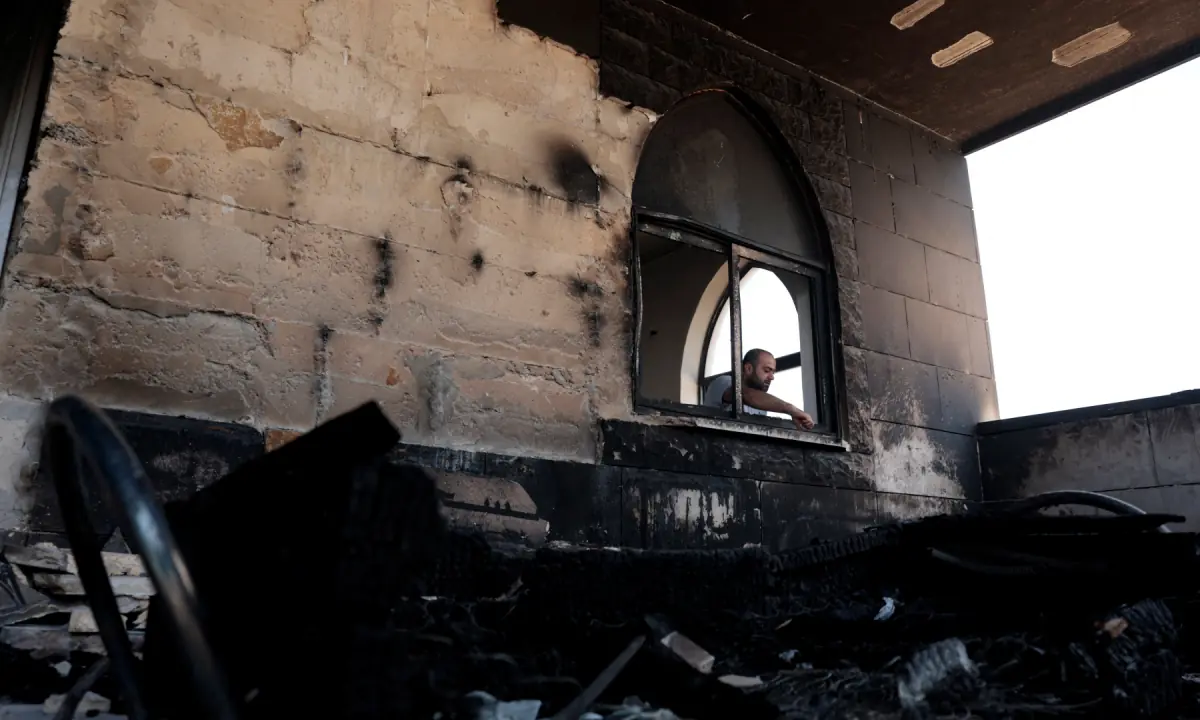
Palestinian officials reported that Israeli settlers set fire to two mosques in the occupied West Bank overnight on Sunday, amid a surge in violence in the region since October 2023. In the town of Qusra, south of Nablus, settlers allegedly torched a mosque under construction, causing significant damage to its entrance and stonework. Attackers also spray-painted Hebrew graffiti, including the word "revenge," on the mosque's walls. The Israeli military confirmed troops were dispatched and found signs of arson and graffiti, stating that Israeli police would investigate. Separately, settlers reportedly set fire to another mosque in the village of Kour, near Tulkarem, and defaced its walls with racist slogans, according to the Palestinian ministry of endowments and religious affairs. This follows an incident on Friday where Israeli settlers attacked Palestinians in the village of Tell, resulting in four Palestinian deaths and two Israeli deaths. In response, the Israeli military conducted raids and arrested dozens of Palestinians in Nablus and nearby towns as part of a "counter-terrorism" operation. Violence in the West Bank has escalated, with Palestinian figures indicating at least 1,097 Palestinians killed by Israeli troops or settlers since October 2023, while Israeli data reports at least 48 Israelis killed in attacks or during operations. The West Bank is home to approximately three million Palestinians and over 500,000 Israelis living in settlements considered illegal under international law.
The reported arson attacks on mosques in the West Bank highlight the escalating cycle of violence and retribution in the region. Such acts, regardless of perpetrator, contribute to a climate of fear and further entrench animosity between communities. The involvement of settlers, if confirmed by investigations, points to a breakdown in security and governance, potentially exacerbated by the ongoing conflict in Gaza. The spray-painted graffiti suggests a motive of revenge, indicating a response to perceived grievances, which can fuel further retaliatory actions. From a systemic perspective, the lack of effective deterrence and the presence of settlements illegal under international law create a volatile environment where such incidents are more likely to occur. Addressing the root causes, including the occupation and the status of settlements, alongside robust law enforcement and accountability for all perpetrators, is crucial for de-escalating tensions and fostering long-term stability.
AI-generated to prompt reflection — not editorial opinion, not advice, not a statement of fact. How this works.