IT Management Becomes a Competitive Differentiator for Paraná Businesses
Brazil saw a significant surge in new business registrations, with 4.6 million micro and small enterprises established between January and November 2025, a 19% increase from the previous year. These small businesses accounted for 97% of all companies founded during this period. Alongside this growth, businesses face the challenge of structuring their information technology (IT) effectively. For small and medium-sized enterprises (SMEs), which often start with makeshift solutions, IT management is evolving from an operational detail to a central competitive capability.
Modern business operations are heavily reliant on connected systems, encompassing finance, customer service, inventory, logistics, and internal communication. As digitalization advances, any system instability directly impacts daily operations. SMEs frequently centralize IT management informally or with a single individual, lacking defined processes for maintenance, backup, or security. This informal approach can falter as companies grow and data complexity increases.
Historically viewed as a support function, IT is now recognized as strategic, influencing team productivity, customer experience, and data security. Companies with planned IT structures, including continuous monitoring, backup policies, and organized support, experience fewer unplanned downtimes and manage incidents more predictably. Paraná, a state with a dynamic economy in agribusiness, industry, logistics, and services, exemplifies this trend. Businesses there increasingly seek structured IT management, either through expanded internal teams or partnerships with specialized IT service providers.
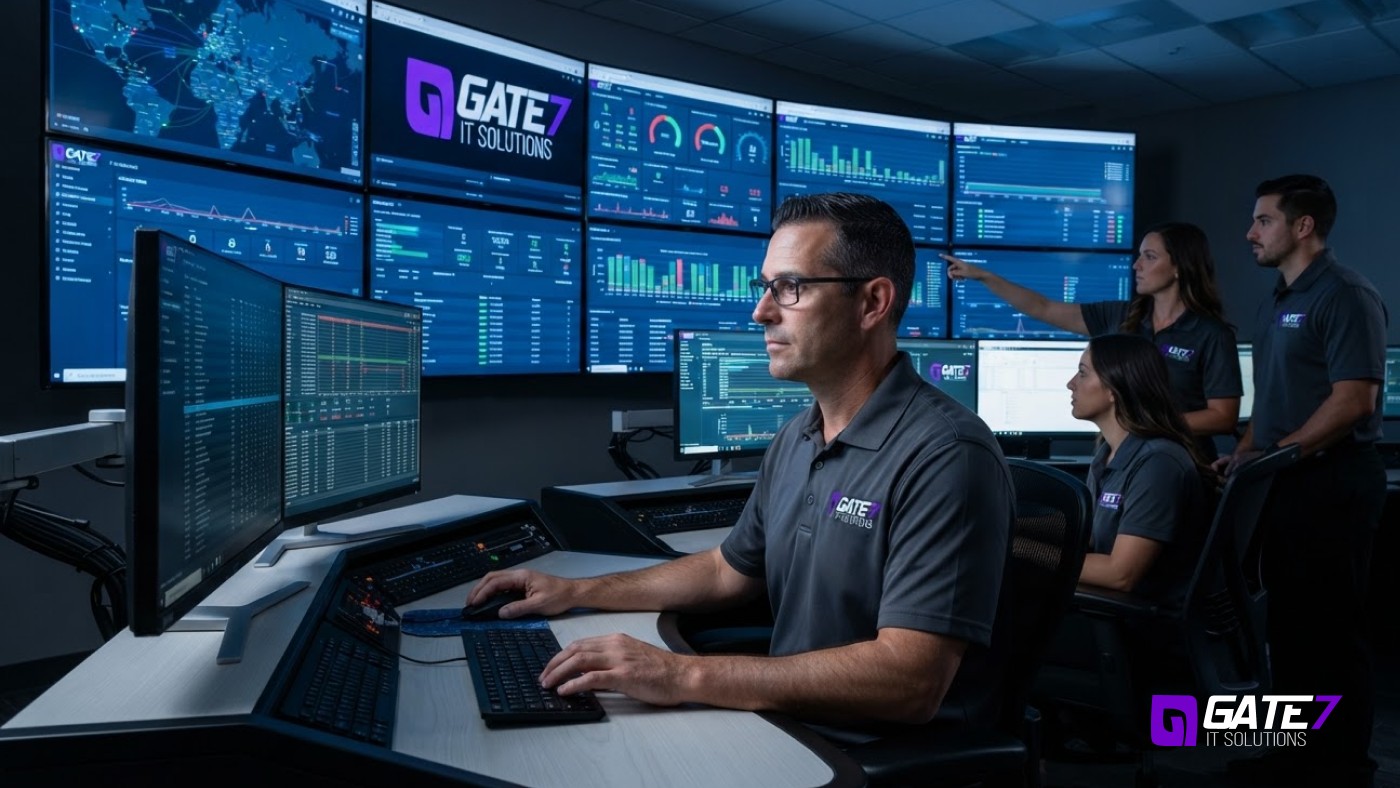
Companies like Gate7 IT Solutions offer specialized IT infrastructure management, providing dedicated technical teams for continuous monitoring of servers, networks, and systems. This allows managers to focus on their core business rather than daily technical issues. The trend of IT outsourcing or co-management is growing, particularly for medium-sized firms, acknowledging the specialized knowledge and resources required for robust technology infrastructure that may not be feasible to maintain internally. Future trends include IT process automation, AI for predictive monitoring, and cloud migration, aiming to identify and resolve failures before they impact operations. Increased data protection regulations also push companies to adopt more organized and auditable IT infrastructures, solidifying IT management's shift from a cost center to a structural investment crucial for sustainable growth.
The increasing reliance on digital infrastructure highlights a systemic shift where IT management transitions from a cost center to a strategic investment. As businesses, particularly SMEs, navigate rapid growth and evolving technological landscapes, the efficiency and security of their IT systems directly correlate with their market competitiveness and resilience. The trend towards specialized IT management services suggests a recognition of the complex expertise and continuous investment required to maintain robust technological frameworks, which may exceed the capacity of many non-tech-centric organizations. Future challenges will likely involve balancing the adoption of advanced technologies like AI and cloud computing with data privacy regulations and the need for continuous workforce upskilling. Organizations that proactively integrate IT maturity into their core strategy will be better positioned to adapt to market dynamics and leverage technology for sustainable growth in the coming decade.
AI-generated to prompt reflection — not editorial opinion, not advice, not a statement of fact. How this works.