Italian Ministers Defend PM Meloni After Trump's Latest Social Media Attack
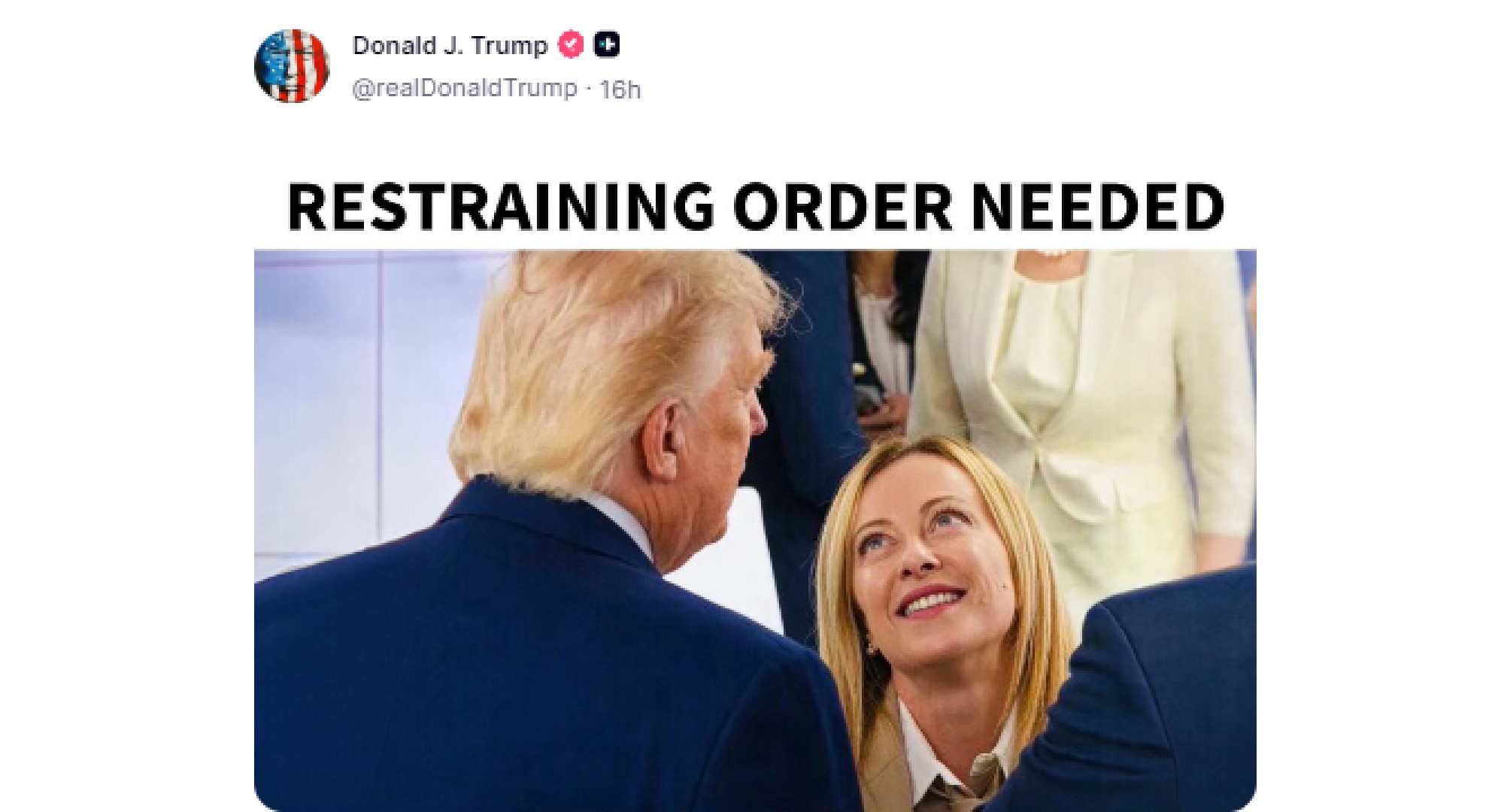
Two Italian ministers defended Prime Minister Giorgia Meloni on Monday, April 6th, following a new attack by U.S. President Donald Trump. Trump, who has been provoking the Italian leader for about two weeks, posted a manipulated image on his Truth Social platform on Sunday, April 5th. The image depicted Meloni appearing to adore him, with the caption "Restraining order needed." Deputy Prime Minister and Foreign Minister Antonio Tajani stated that the message, which was featured on the front pages of major Italian newspapers, required no comment. He added that Italy would not respond to such statements and would move on to other topics, emphasizing that transatlantic relations extend beyond individual remarks. Defense Minister Guido Crosetto, who will accompany Meloni to an upcoming NATO meeting, stressed the importance of preserving transatlantic relations and maintaining the unity of the Atlantic Alliance and the Western world. Meloni herself has not commented on Trump's post. This is not the first time Trump has targeted Meloni; in June, he claimed without evidence that the far-right leader had pleaded for a photo during a G7 meeting.
This incident highlights the complex interplay between international diplomacy and social media commentary. While Donald Trump's remarks are framed as personal provocations, they can nonetheless impact diplomatic relations and domestic political perceptions. The Italian government's measured response, focusing on the preservation of transatlantic ties and alliance unity, suggests a strategic approach to de-escalate potential friction. This strategy prioritizes institutional relationships over individual rhetoric, a common tactic when navigating unpredictable political discourse. Looking ahead, the increasing reliance on social media for political communication by global leaders presents ongoing challenges for maintaining stable international relations, particularly as platforms can amplify personal disputes into broader diplomatic concerns.
AI-generated to prompt reflection — not editorial opinion, not advice, not a statement of fact. How this works.