Italy Seeks to De-escalate After Trump's Personal Attacks
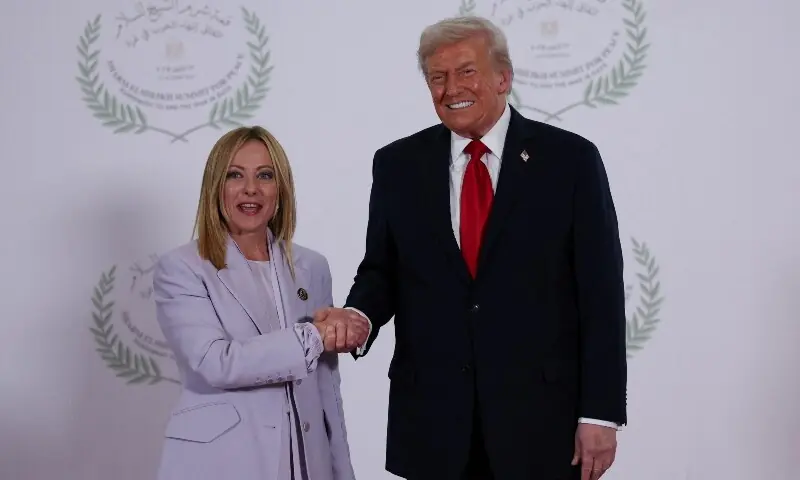
Italy's government has stated it will not respond further to recent personal attacks made by former US President Donald Trump against Prime Minister Giorgia Meloni, aiming to protect bilateral relations. The dispute reignited when Trump posted a doctored image of Meloni on Truth Social with the caption "RESTRAINING ORDER NEEDED," following an earlier accusation that Meloni had "begged" him for a photo at a G7 summit. Meloni had previously denied Trump's claim and criticized him for his remarks on the Iran conflict. Despite the provocations, Italian Foreign Minister Antonio Tajani emphasized that Rome wishes to maintain good relations with the United States regardless of the administration. He characterized Trump as someone who "loves to provoke" on social media and stated Italy's decision to cease responding. Defence Minister Guido Crosetto echoed this sentiment, and while Meloni's office declined to comment on potential interactions, a source close to her indicated she would greet Trump cordially. Meloni, once a supporter who attended Trump's 2025 inauguration, has seen their relationship strain over policy disagreements and Trump's public criticisms. The Italian government demonstrated a commitment to maintaining ties by attending a recent US Independence Day celebration in Rome, despite earlier speculation of a boycott. The public spat has drawn condemnation in Italy, with opposition parties showing solidarity with Meloni, and Italian media humorously mocking Trump's remarks.
The diplomatic friction between Italy and former US President Donald Trump highlights the challenges of managing personal relationships within international diplomacy, particularly when amplified by social media. Italy's stated strategy of de-escalation, focusing on maintaining institutional ties with the US rather than engaging in retaliatory rhetoric, reflects a pragmatic approach to navigating unpredictable political discourse. This approach seeks to insulate bilateral relations from individual political personalities, a prudent strategy given the potential for future political shifts. The situation underscores the evolving nature of statecraft in the digital age, where public pronouncements can quickly strain diplomatic channels, and the need for leaders to balance domestic political considerations with the imperative of stable international partnerships.
AI-generated to prompt reflection — not editorial opinion, not advice, not a statement of fact. How this works.