Italy sees Bangladesh as prime investment destination, says envoy
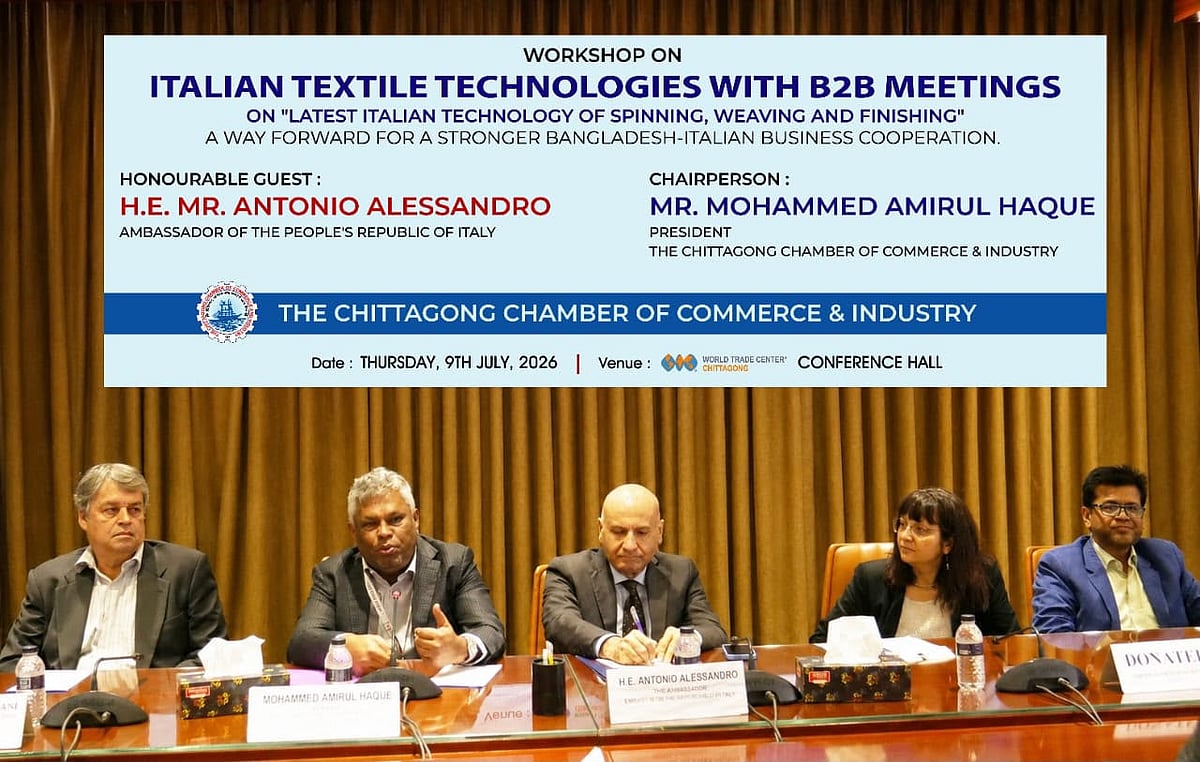
The Italian Ambassador to Bangladesh, Antonio Alessandro, has stated that the current environment in Bangladesh is favorable for business, trade, and investment. He highlighted the prevailing stable political climate as a key factor, suggesting it is an opportune moment for Italian entrepreneurs to invest in the country. Ambassador Alessandro made these remarks on Thursday morning during a business workshop at the World Trade Center in Chittagong, which brought together representatives from Italian textile machinery and technology manufacturers and Bangladeshi businesses. The event was organized by the Chittagong Chamber of Commerce and Industry, with participation from 11 Italian and 31 Bangladeshi companies.
Ambassador Alessandro expressed Italy's readiness to provide modern machinery and technological support to enhance product diversity and quality in Bangladesh's garment industry. He also emphasized leveraging Chittagong's strategic geographical location to foster greater cooperation between businesses and investors from both nations. The President of the Chittagong Chamber of Commerce, Mohammad Ammirul Hoq, pointed to several major infrastructure projects underway in Chittagong, including the China Economic and Industrial Zone, a free trade zone, and the Matarbari deep-sea port. He believes these projects will unlock new opportunities for regional connectivity, trade, investment, and industrialization, urging Italian companies to capitalize on this potential. Mirza Salman Ispahani, Italy's Honorary Consul, noted the demand for Italian machinery in Bangladesh's textile sector and anticipates that such business meetings will strengthen technological and commercial ties between the two countries.
The Italian Ambassador's remarks underscore a perception of Bangladesh as a potentially attractive investment hub, citing political stability and infrastructural development as key drivers. This perspective aligns with broader trends of emerging economies seeking foreign direct investment to fuel industrial growth and diversification, particularly in sectors like textiles. The emphasis on technological transfer and leveraging geographical advantages points to a strategic approach by both nations to deepen economic ties. Future considerations for sustained investment will likely hinge on the continued realization of infrastructure projects, the ease of doing business, and the effective integration of advanced technologies to enhance competitiveness in the global market. The interplay between domestic policy, international partnerships, and global economic shifts will shape the long-term investment landscape.
AI-generated to prompt reflection — not editorial opinion, not advice, not a statement of fact. How this works.