Jaguar Captured After 49 Days on the Run in Paraná Company
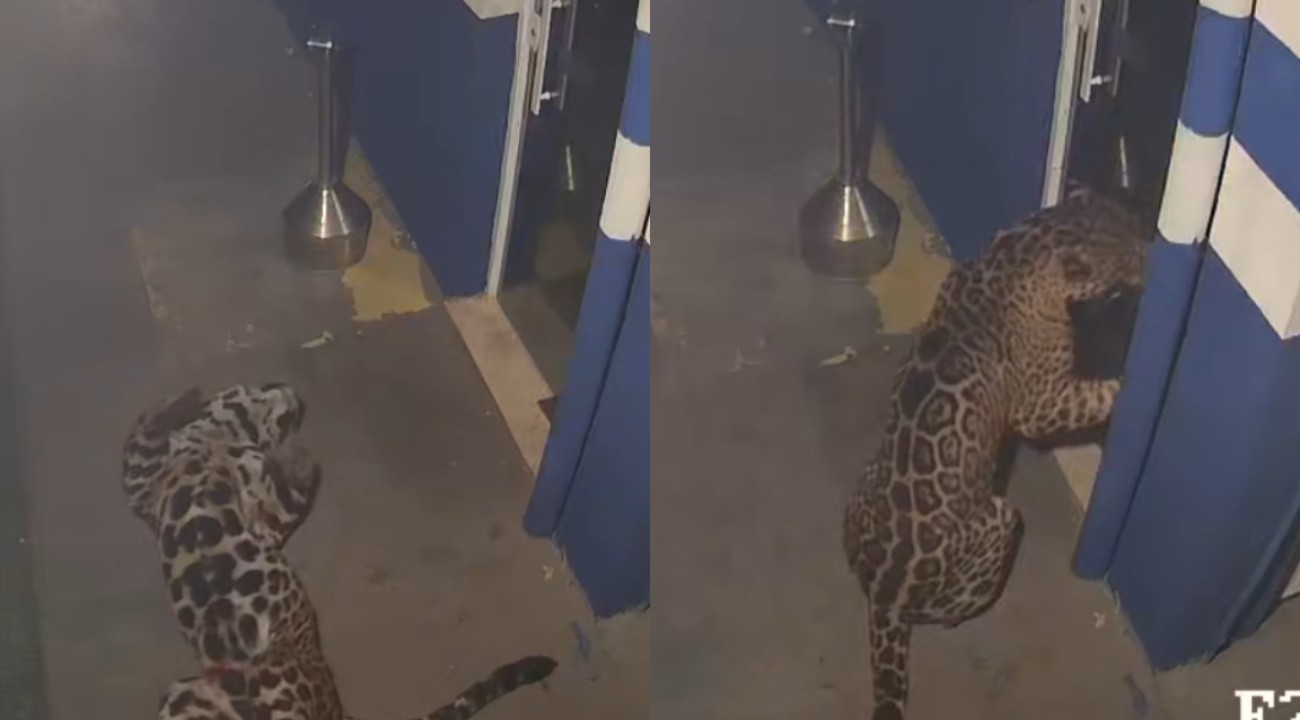
A jaguar that had been roaming an industrial facility in Mandaguari, Paraná, Brazil, for 49 days has finally been captured. The animal was located and safely apprehended on Thursday, June 2nd, by a specialized team conducting an operation to find it. For nearly seven weeks, the jaguar had been observed within the company premises, notably interacting with its own reflection in a glass door. This behavior was captured on video on May 11th and 12th, with biologists confirming it was the same individual due to its unique spot pattern. The jaguar was seen lying down, rolling onto its back, and pawing at the door, suggesting it was intrigued by its reflection. Following its containment, the jaguar underwent a veterinary evaluation and will remain under specialized technical supervision. Its ultimate destination will be determined based on technical, environmental, and conservation criteria. The capture operation involved a collaborative effort between multiple institutions, including the Mandaguari City Hall, the Water and Land Institute (IAT), the Environmental Military Police, the State Civil Defense Coordination, the Fire Department, and the Brazilian Institute of Environment and Renewable Natural Resources (Ibama). The appearance of a jaguar in the Northern Paraná region is considered rare, as the species typically inhabits areas like the Iguaçu National Park and the Serra do Mar, indicating this animal was likely dispersing from another location.
The extended presence of a jaguar within an industrial area, particularly its interaction with its reflection, highlights the increasing encroachment of human development into wildlife habitats. The jaguar's unusual behavior, while appearing playful, likely stems from disorientation and stress caused by its displacement from its natural environment. The multi-agency response underscores the complexity of managing wildlife in human-dominated landscapes, balancing public safety with animal welfare and conservation. Future urban and industrial planning must proactively consider wildlife corridors and habitat preservation to mitigate such incidents, preventing unnecessary stress on animals and potential risks to human populations. This event serves as a reminder of the ecological pressures exerted by human expansion and the need for integrated strategies that accommodate biodiversity.
AI-generated to prompt reflection — not editorial opinion, not advice, not a statement of fact. How this works.