Jaguar Hit by Car in Maranhão After Fleeing Wildfire
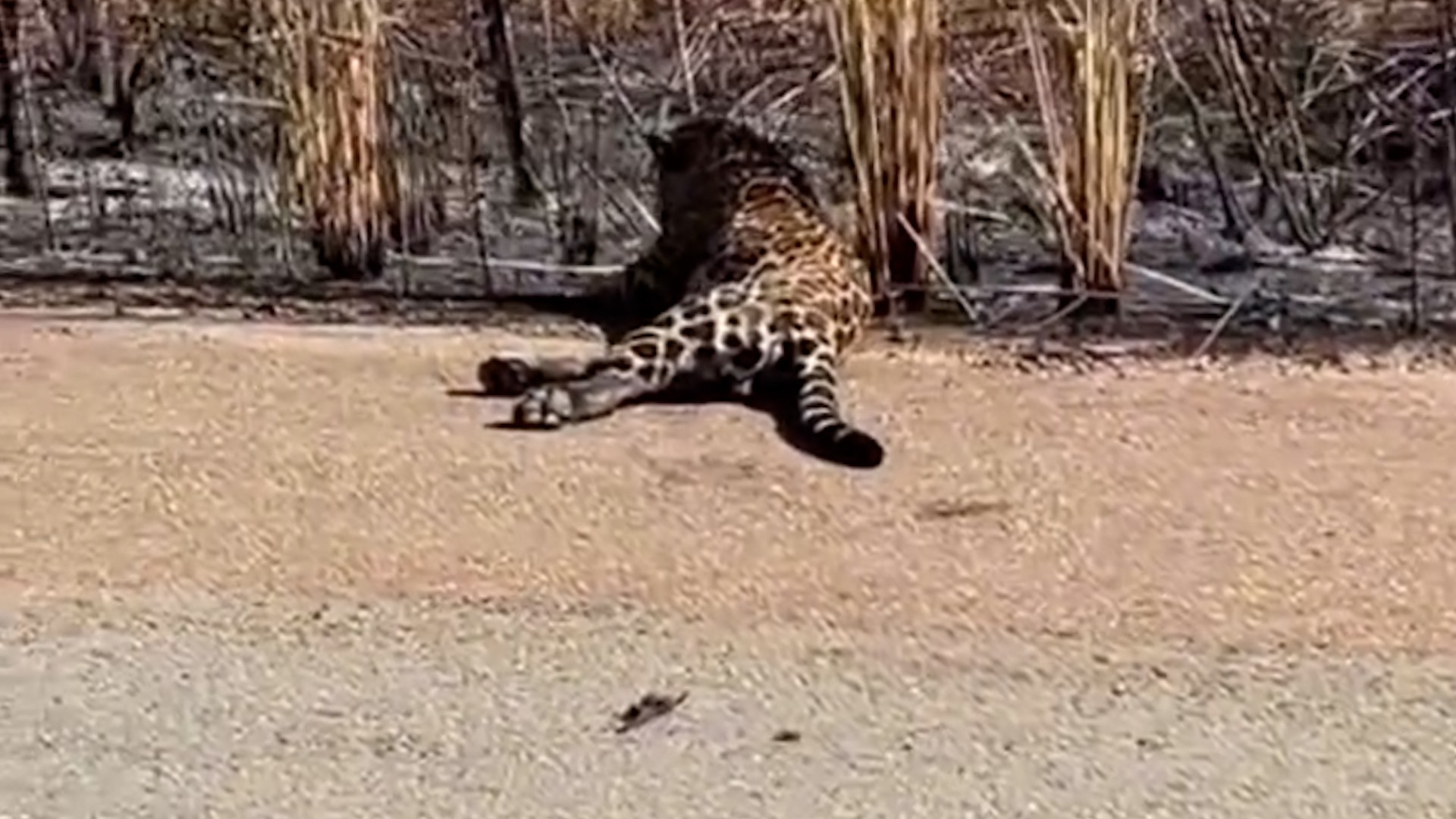
A jaguar was struck by a vehicle on a rural road in Balsas, Maranhão, Brazil, on Friday, October 3rd. The incident occurred near the Batavo settlement, where local reports suggest the animal was attempting to escape a wildfire that had occurred the previous day. While trying to cross the road, the jaguar was hit by a passenger car, sustaining severe injuries, particularly to its hindquarters, rendering it unable to walk.
Despite its debilitated state, the jaguar attempted to drag itself back into the nearby forest using its front paws. Witnesses and drivers passing by documented the scene and alerted authorities, including the Environmental Guard, Fire Department, and the Secretariat of Environment, who were dispatched with a veterinarian. However, due to the settlement's distance from Balsas, the rescue teams arrived after the animal had already left the road. Searches in the adjacent forest were unsuccessful in locating the jaguar, leading to speculation that it may not have survived long given its condition. The event highlights the dangers posed by wildfires, which force wildlife to seek refuge in unfamiliar areas, increasing encounters with human infrastructure and traffic. Authorities are urging the public to prevent fires, especially in dry vegetation, as discarded cigarette butts can easily ignite blazes, endangering wildlife, residents, and motorists.
This incident underscores the critical intersection of environmental degradation and wildlife displacement. The wildfire, a direct or indirect consequence of human activity, forced the jaguar into a perilous environment – a roadway. The animal's tragic encounter serves as a stark illustration of how habitat destruction and climate-driven events like increased wildfires create unavoidable conflict zones for wildlife. This situation highlights systemic challenges in conservation, particularly the need for proactive habitat management and robust fire prevention strategies in regions prone to such events. Furthermore, it raises questions about infrastructure development and wildlife corridors, suggesting that roads in or near sensitive ecosystems require enhanced safety measures and public awareness campaigns to mitigate such preventable losses in the future.
AI-generated to prompt reflection — not editorial opinion, not advice, not a statement of fact. How this works.