Jaguar's unusual hunting dive fails as capybara escapes in Brazil's Pantanal
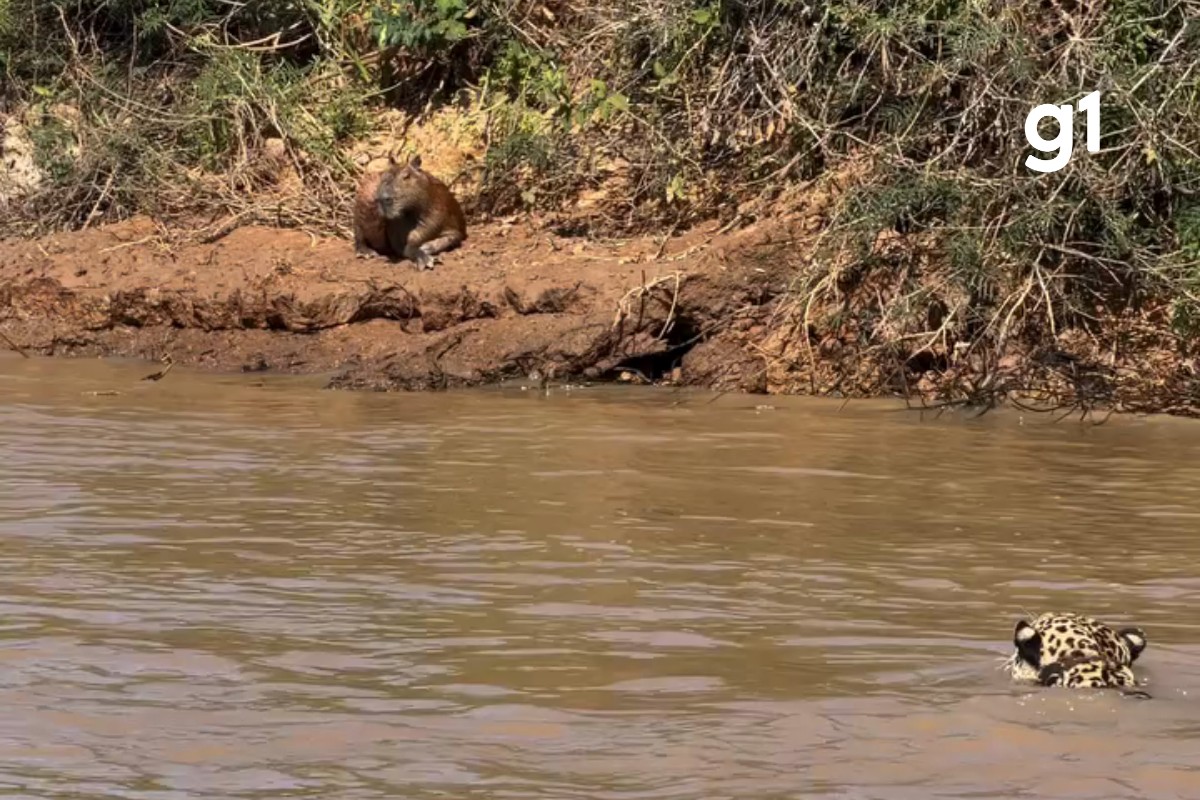
A male jaguar named Ousado, known for his distinctive hunting techniques, was captured on video attempting an unusual underwater ambush on a capybara in Brazil's Pantanal region. The incident occurred on the Três Irmãos River near Porto Jofre, Mato Grosso, and was filmed by tour guides Branco Arruda and Raquelle Saladin for a group of American tourists. The video shows Ousado silently swimming towards the riverbank where the capybara was located. He then dove underwater in an attempt to surprise his prey. However, the capybara appeared to sense the jaguar's approach and leaped into the river, successfully evading the attack. Ousado surfaced and seemingly abandoned the hunt as the capybara swam away. Guides reported maintaining a distance to avoid interfering with the natural predation process. This specific hunting strategy, involving a silent underwater approach, is considered uncommon among jaguars in the area, contributing to Ousado's notoriety. The jaguar is also recognizable by a monitoring collar he still wears, a remnant from his rescue in 2020. Ousado suffered severe burns during the major Pantanal fires that year and was fitted with a GPS collar to track his recovery and adaptation. Although the collar was designed to detach automatically, the mechanism failed. Experts confirm the collar does not impede Ousado's normal activities, such as hunting and swimming, and poses no health risk. Capturing him again to remove the collar is deemed more dangerous than leaving it on, given his age (over 13 years) and the risks associated with tranquilizing a wild animal in a challenging environment.
This event highlights the complex interplay between wildlife, conservation efforts, and public engagement. The jaguar's unique hunting behavior, while captivating, underscores the adaptive strategies evolved within its ecosystem. The continued presence of the monitoring collar, a result of a technical malfunction, raises questions about the long-term management of collared wildlife and the potential for unintended consequences in conservation programs. While the collar currently poses no apparent harm, its persistence prompts consideration of the ethical and practical challenges in wildlife intervention, particularly when removal presents greater risks than continued observation. This situation emphasizes the need for robust monitoring systems and contingency plans in wildlife research to ensure animal welfare and the integrity of scientific data over extended periods, especially in the face of environmental challenges like those posed by the 2020 fires.
AI-generated to prompt reflection — not editorial opinion, not advice, not a statement of fact. How this works.
