Jamaat-e-Islami Amir Warns of Lost Public Trust if Referendum Verdict Ignored
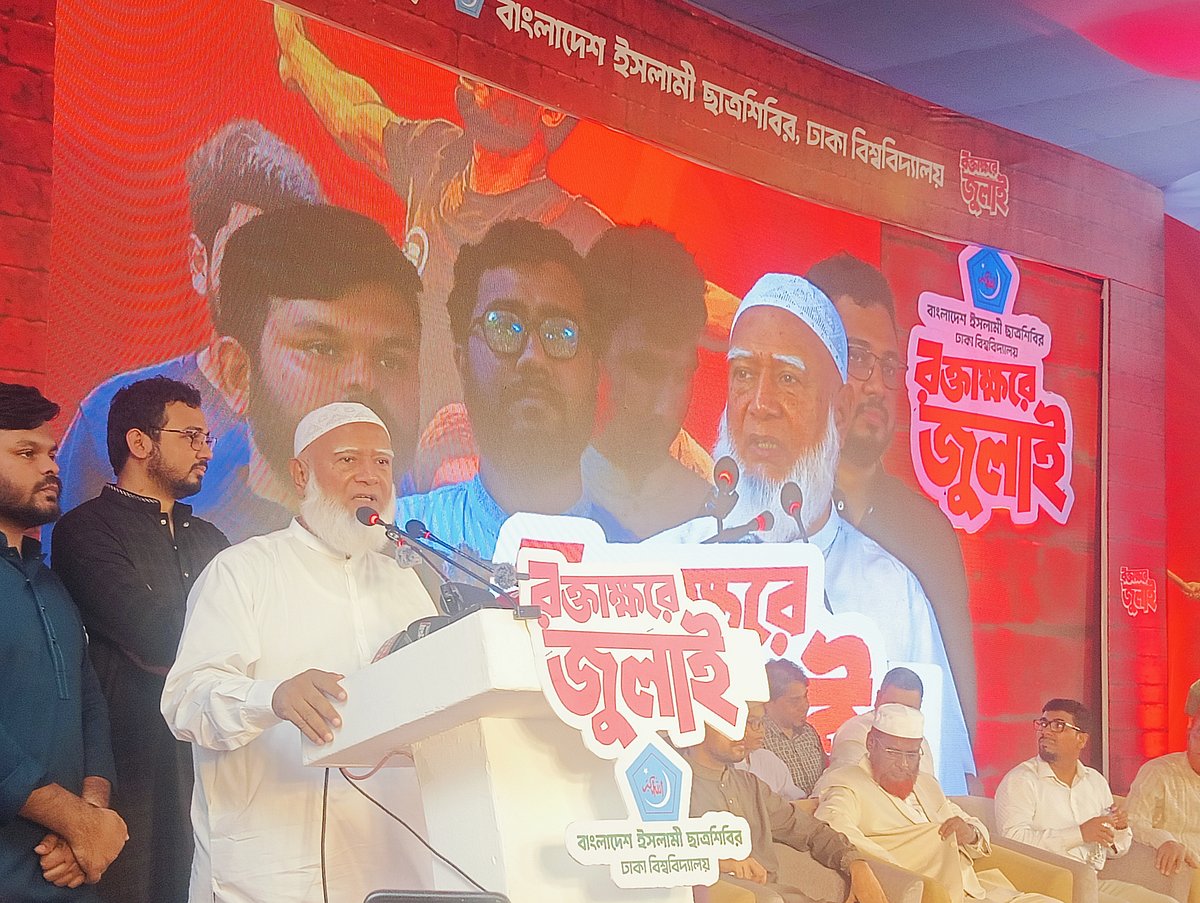
Shafiqur Rahman, the Amir of Jamaat-e-Islami and Leader of the Opposition in the National Parliament, stated that his party will fight within and, if necessary, on the streets to implement the verdict of a referendum. He warned that if the referendum's outcome is not realized, the public will lose faith in the electoral system and democratic institutions. Rahman made these remarks on Sunday afternoon at the closing ceremony of an exhibition at Dhaka University, organized by the Islami Chhatra Shibir's Dhaka University branch. He emphasized that if demands are not met in parliament, they will be achieved through protests, asserting that no concessions will be made and the people's mandate will not be betrayed or insulted. Rahman also criticized the government for abandoning promises made before elections regarding an independent judiciary, anti-corruption commission, human rights commission, and election commission, accusing them of clinging to a "fascist structure." He urged the government to officially honor those who died in July, stating that financial aid alone is insufficient and their sacrifices should be remembered as the current government is a "product of July." Mia Ghulam Parwar, Secretary General of Jamaat-e-Islami, echoed these sentiments, expressing dismay that the ruling party is denying the referendum, the July National Charter, and presidential orders, despite benefiting from the "July revolution." He highlighted that all participating political parties signed the July Charter, contradicting claims of no consultation. Parwar questioned the government's reversal on the referendum and constitutional reforms after gaining a majority, noting that the BNP did not raise objections to the process or presidential authority during the four months prior to the election.
This statement from Jamaat-e-Islami's leadership highlights a critical juncture in Bangladesh's political landscape, where the legitimacy of electoral processes and institutional mandates is being contested. The party's rhetoric, framing the current government as a product of a specific historical event and demanding adherence to a "referendum verdict" and "July National Charter," suggests a deep divergence from the government's interpretation of its mandate. The analysis of such political discourse requires understanding the underlying incentive structures: for opposition parties, challenging the ruling coalition's legitimacy and mobilizing public discontent are key strategies for future political leverage. Conversely, the government's actions, if perceived as disregarding popular mandates or constitutional processes, risk eroding public trust and potentially fueling further instability. Looking ahead, the sustainability of democratic institutions in Bangladesh will depend on the ability of all political actors to navigate these disagreements within established legal and constitutional frameworks, fostering a political environment where diverse voices can be heard and respected, thereby strengthening, rather than undermining, the nation's democratic foundations.
AI-generated to prompt reflection — not editorial opinion, not advice, not a statement of fact. How this works.