Jamaat-e-Islami Denies Secret Deals, Vows to Uphold Justice for July Uprising Victims
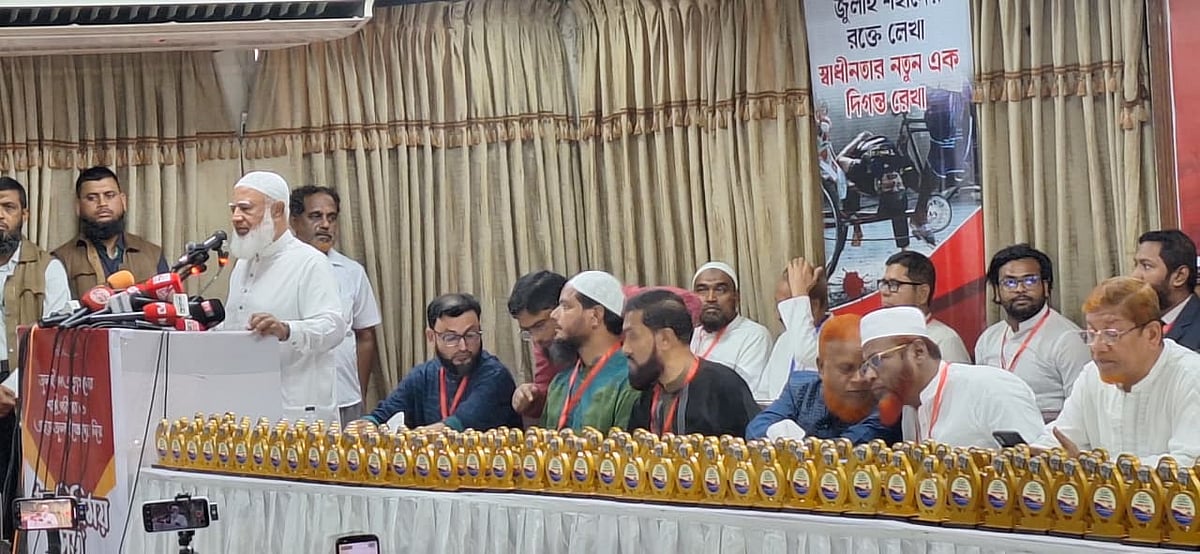
Shafiqur Rahman, leader of the opposition and Ameer of Bangladesh Jamaat-e-Islami, stated that his party did not make any secret compromises with the previous government, despite the alleged killing of 11 top leaders and 1,000 activists, along with the seizure of homes and businesses. He asserted that Jamaat did not seek permission to protest and acted within its capabilities to oppose the autocratic regime. Speaking at a meeting with families of martyrs and fighters from the July uprising, Rahman highlighted Jamaat's full support for the movement from its inception in July 2024. He noted that after the government banned Jamaat, the party resolved to fight for survival, contrasting this with other parties that distanced themselves from the movement. Rahman emphasized that Jamaat has not claimed credit for the success of the youth-led July uprising, despite significant sacrifices, including numerous martyrs. He also addressed alleged extortion activities starting August 6, 2024, stating that Jamaat attempted to mediate but their efforts were unsuccessful. Rahman criticized the current implementation of quotas, describing it as a "haven of corruption" where unqualified, corrupt individuals are appointed to key positions, displacing deserving candidates. He declared that Jamaat will not tread the "dark path" the country is heading towards and will advocate for the martyrs and the public in parliament. Rahman demanded justice for the killings during the July uprising, asserting that justice will be served regardless of the time it takes. He also claimed that those speaking against injustice are being attacked. Jamaat Secretary General Mia Ghulam Parwar reiterated the commitment to implementing the July charter and referendum, threatening street protests if parliamentary solutions fail. Political scientist Dilara Chowdhury urged the Prime Minister to embrace the referendum to solidify the BNP's political standing. Former diplomat Shakib Ali praised the July 2024 uprising as a pivotal moment. Rokeya Begum, mother of a July martyr, called for an expedited trial process for the July mass killings by increasing the number of tribunals. Assistant Secretary General of Jamaat, Hamidur Rahman Azhad, stressed the need for unity to eliminate those who seek to erase the July uprising from history. Mir Mostafizur Rahman, father of a martyr, advised the government to learn from past mistakes to avoid a similar fate. The meeting, presided over by Nurul Islam Bulbul, also featured speeches from various other leaders and participants.
The statement from Jamaat-e-Islami's leader frames the party's actions as principled resistance against an oppressive regime, emphasizing a lack of compromise and a commitment to justice for victims of the July uprising. The narrative positions Jamaat as a victim of state repression yet a proactive force for systemic change, advocating for accountability and fair governance. The analysis of the political landscape suggests a deep societal division and a struggle over the interpretation and implementation of democratic mandates, particularly concerning the July referendum and quota systems. The reference to "dark alleys" and "corruption" points to concerns about institutional integrity and the potential for authoritarian resurgence. The call for justice for martyrs, spanning decades, highlights a persistent demand for historical reckoning and accountability within the nation's political framework. Future challenges likely involve navigating the complex interplay between political opposition, state power, and the pursuit of justice, with the potential for continued social mobilization if grievances remain unaddressed.
AI-generated to prompt reflection — not editorial opinion, not advice, not a statement of fact. How this works.