Jamaat-e-Islami Leader Criticizes Stalled Reforms, Calls for Public Action
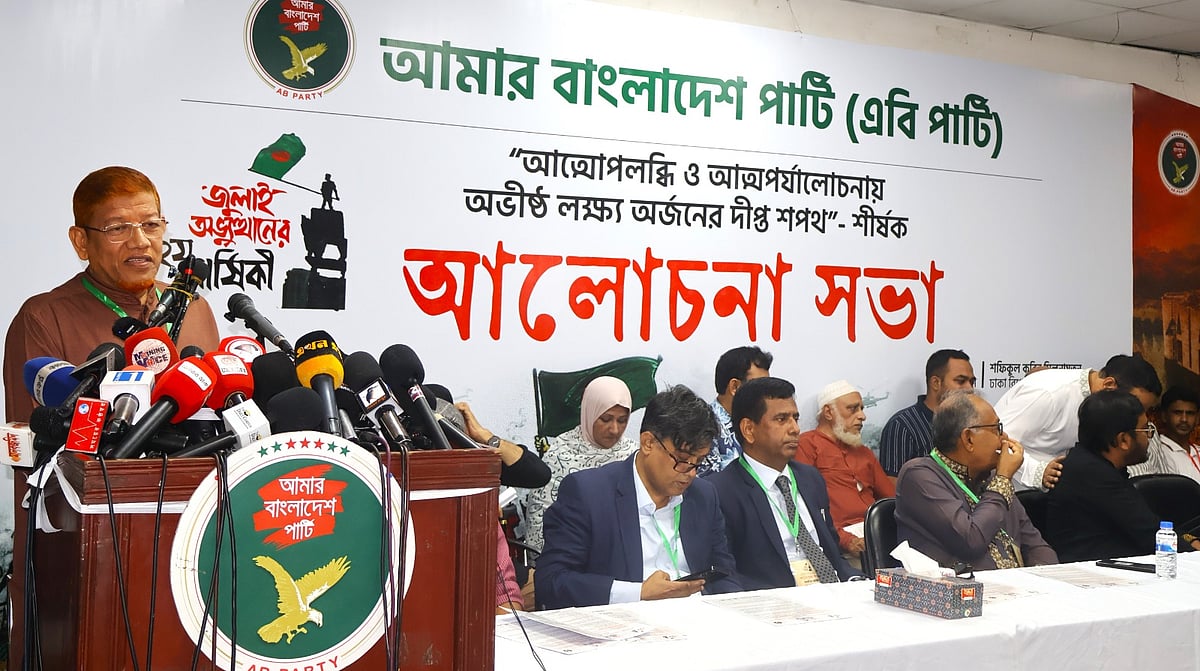
H.M. Hamidur Rahman Azad, Assistant Secretary General of Jamaat-e-Islami, has urged citizens to resist those seeking to erase the "July uprising." He stated that while some "paperwork" related to implementing the July aspirations has occurred, there is ongoing contention about its acceptance. Azad believes this struggle will ultimately prove who holds more power. He made these remarks on Thursday at a discussion event organized by Amar Bangladesh Party (AB Party) at the Dhaka Reporters Unity, commemorating the second anniversary of the July uprising. Azad criticized the government's failure to enact fundamental reforms despite extensive discussions and promises, noting that many ordinances were abandoned in parliament. He highlighted that 70% of the population supported reforms, yet these remain largely unrealized. The leader also alleged that attempts were made to weaken public will by revoking the referendum ordinance, though he welcomed recent court rulings reinstating the caretaker government system and referendums. Azad implored the government to prioritize constitutional reform over amendment, asserting that public referendums clearly indicated a desire for structural changes. He warned that bypassing the public mandate and establishing a parliamentary autocracy would not lead to genuine democracy. The Jamaat leader emphasized that parliamentary effectiveness hinges on prioritizing national interest over partisan discourse and called for an end to impunity, advocating for the prosecution of those who ordered and supported criminal acts, not just the perpetrators. He concluded by stating that if parliament fails to deliver reforms, solutions must be sought through street protests and public action.
The statement from Jamaat-e-Islami's Assistant Secretary General highlights a significant disconnect between stated public will and governmental action regarding constitutional reforms. The emphasis on "July aspirations" and "referendum" suggests a narrative framing that positions the current government as unresponsive to popular mandates. The call for "street protests" if parliamentary solutions fail indicates a potential escalation strategy, leveraging public sentiment to pressure the administration. This dynamic reflects a broader challenge in governance where institutional processes may be perceived as insufficient or manipulated, leading to calls for extra-institutional mobilization. The analysis of "parliamentary autocracy" and "dishonesty with the nation" points to a critique of democratic functioning itself, suggesting that current legislative structures may not adequately represent or enact the people's interests, potentially creating fertile ground for political instability if reforms are not addressed substantively.
AI-generated to prompt reflection — not editorial opinion, not advice, not a statement of fact. How this works.