James Webb Telescope Captures Supermassive Black Hole Devouring Gas
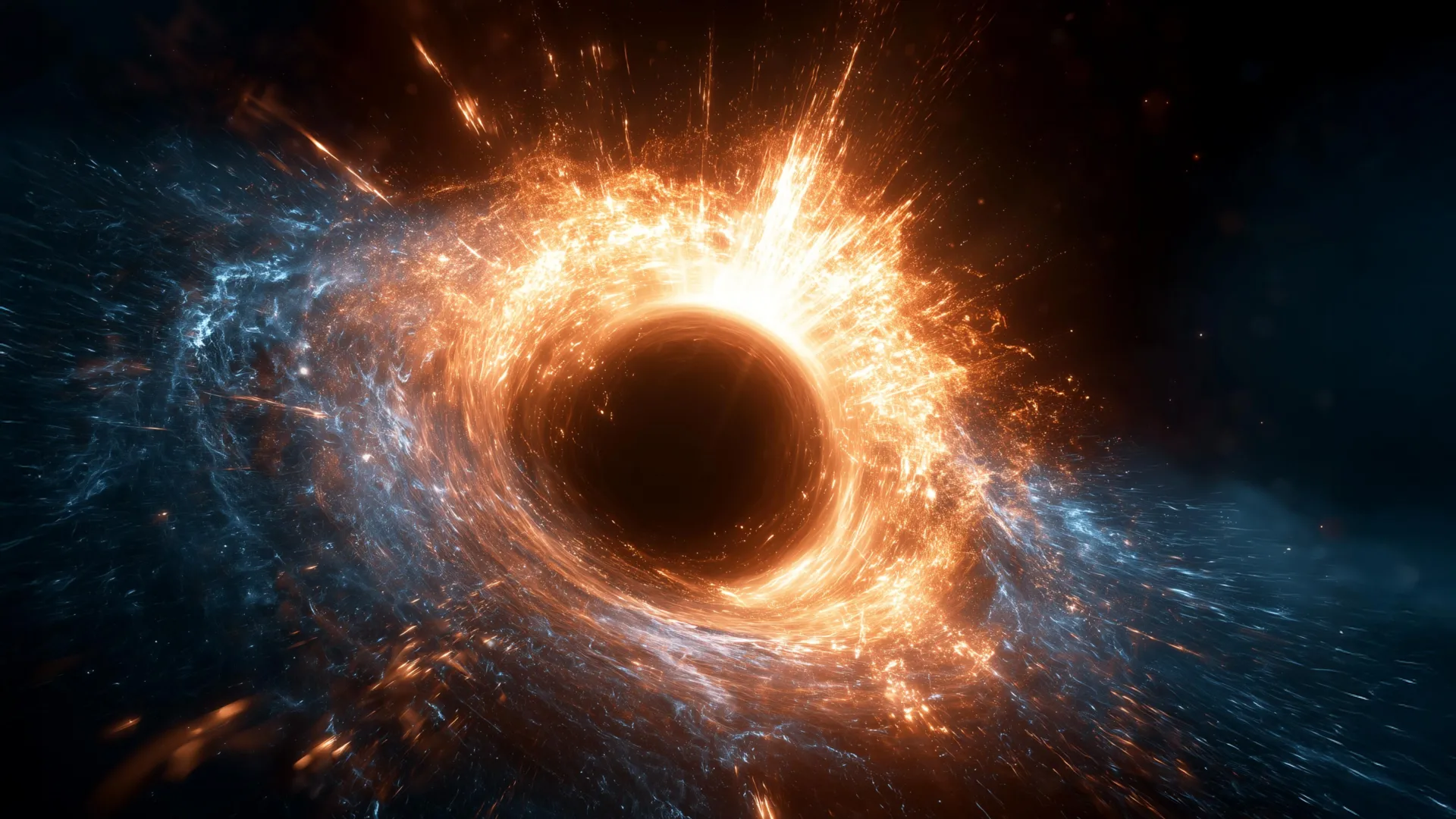
The James Webb Space Telescope (JWST) has captured unprecedentedly detailed images showcasing a supermassive black hole at the center of the galaxy NGC 4696 actively consuming gas. These observations reveal a massive filament structure that appears to be directing material towards an 800-light-year-wide accretion disk. Within this disk, gas is observed to be spiraling inwards at speeds reaching up to 600 kilometers per second. This phenomenon provides new insights into the feeding mechanisms of supermassive black holes. The findings suggest a potential cyclical process where black holes might recycle their own fuel. This could involve heating surrounding gas with powerful jets and subsequently drawing in the cooled material. This discovery offers a closer look at the dynamic processes occurring around these cosmic giants.
The JWST's detailed imagery of NGC 4696's central black hole offers a rare glimpse into the mechanics of galactic evolution. By observing the inflow of gas and the formation of an accretion disk, scientists can refine models of black hole growth and their impact on host galaxies. The proposed fuel recycling mechanism, if confirmed, highlights a complex feedback loop where the black hole's activity influences its own sustenance. This has implications for understanding energy distribution within galaxies and the conditions necessary for star formation. Future observations will likely focus on quantifying the efficiency of this recycling process and its prevalence across different galactic environments, providing a more comprehensive picture of cosmic ecosystems over the next decade.
AI-generated to prompt reflection — not editorial opinion, not advice, not a statement of fact. How this works.