James Webb Telescope Discovers Exoplanet That Survived Stellar Explosion
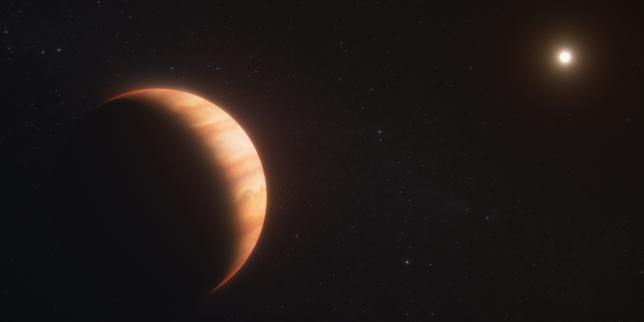
The James Webb Space Telescope has identified an exoplanet that has survived the explosion of its parent star. This massive exoplanet orbits a white dwarf, the remnant core of a star that has exhausted its nuclear fuel. Scientists are studying the atmosphere of this exoplanet to gain insights into the potential future of gas giants within our own Solar System. Specifically, they are looking at what these giant planets might become long after our Sun ceases to shine. This discovery offers a unique opportunity to observe the long-term fate of planetary systems and the resilience of planets in extreme cosmic environments. The findings could significantly advance our understanding of planetary evolution and the conditions necessary for habitability in the distant future.
The observation of an exoplanet surviving a stellar explosion provides a compelling case study for planetary resilience in the face of extreme astrophysical events. By examining the atmospheric composition of this exoplanet orbiting a white dwarf, researchers can extrapolate potential evolutionary pathways for gas giants in our Solar System. This analysis offers a glimpse into the long-term stability of planetary systems, prompting consideration of how gravitational and atmospheric dynamics might persist even after a star's demise. Understanding such survival mechanisms can inform future exoplanet detection strategies and our broader comprehension of cosmic evolution over geological timescales.
AI-generated to prompt reflection — not editorial opinion, not advice, not a statement of fact. How this works.