James Webb Telescope Discovers Hundreds of 'Little Red Dots' in Early Universe
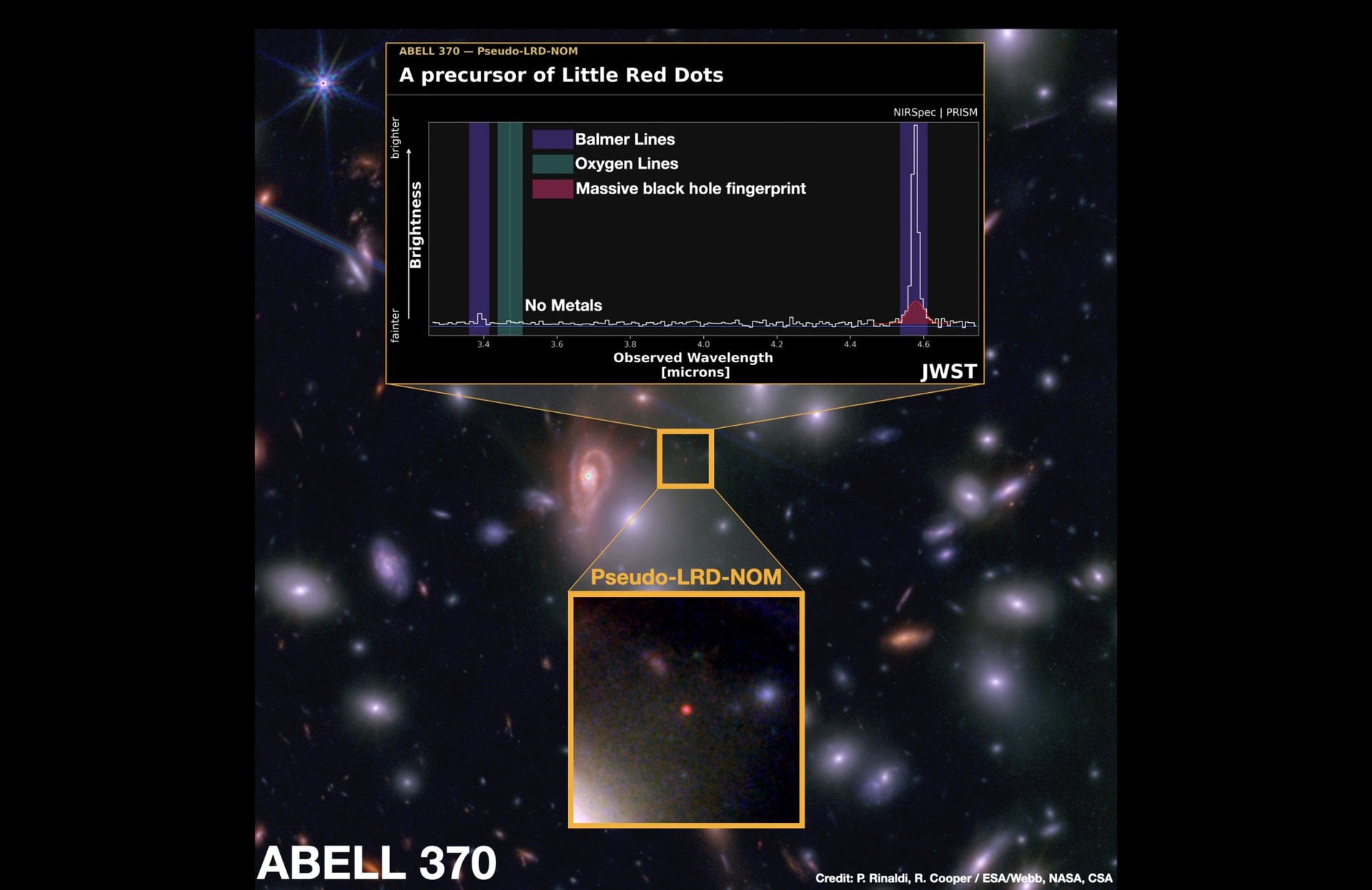
The James Webb Space Telescope (JWST) has identified over 300 'Little Red Dots,' a newly discovered class of celestial objects. These objects, first identified in 2024, are characterized by their small size and reddish appearance in JWST's infrared observations. They are located in the distant, early universe, having been detected through the telescope's extensive infrared surveys. The discovery of these 'Little Red Dots' adds to the intriguing findings made possible by JWST's advanced infrared sensitivity. Their presence in the early universe suggests they may represent very young, primordial objects. Further study is ongoing to understand their exact nature and formation.
The discovery of 'Little Red Dots' by the JWST highlights the increasing power of observational astronomy to probe the early universe. These objects, appearing red and small in infrared light, represent a new category of celestial bodies. Their identification underscores the scientific value of dedicated infrared surveys, which can reveal phenomena not easily detected by other means. Future research will likely focus on characterizing the composition and evolutionary stage of these dots, potentially refining our models of cosmic formation and the distribution of matter in the universe's infancy. This finding also points to the ongoing potential for unexpected discoveries as new observational capabilities are deployed.
AI-generated to prompt reflection — not editorial opinion, not advice, not a statement of fact. How this works.