James Webb Telescope Reveals Centaurus A Galaxy's Collision Scars and Black Hole Activity
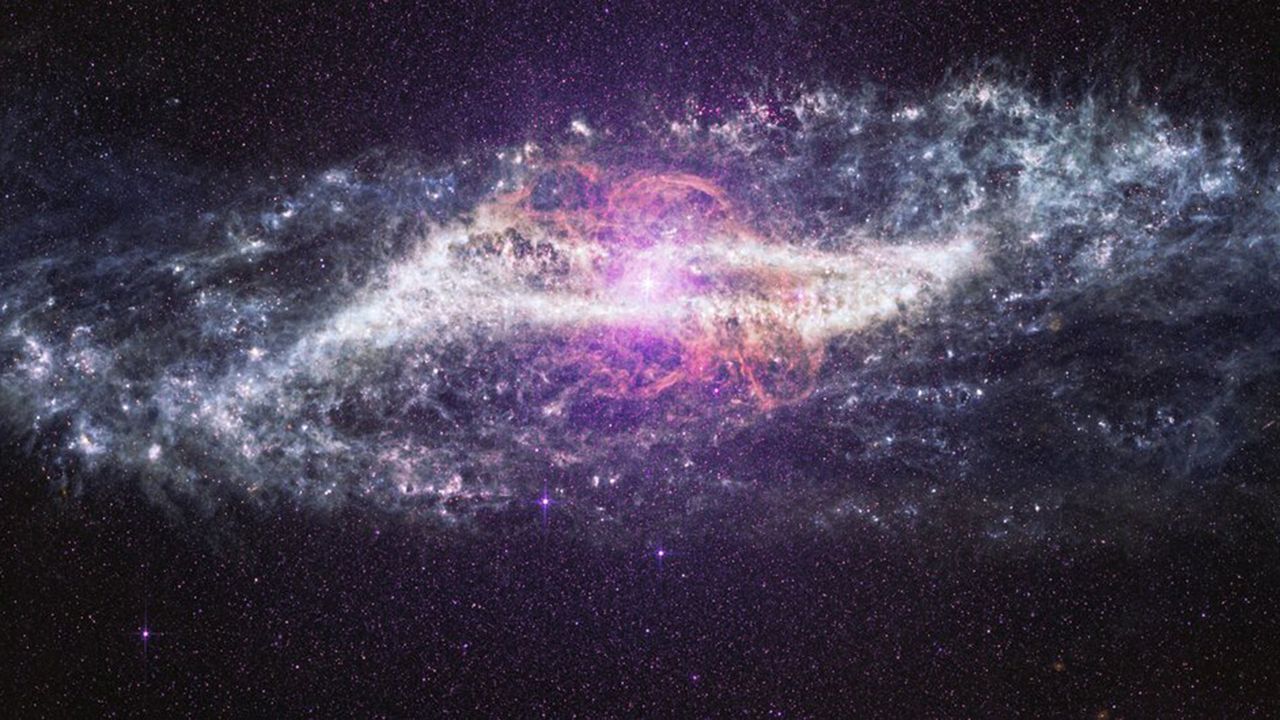
The James Webb Space Telescope (JWST) has captured a new image of the nearby Centaurus A galaxy, offering an unprecedented view of its internal structures. This image showcases the galaxy's star dust, revealing the aftermath of past collisions and violent events. The JWST's advanced infrared capabilities have allowed astronomers to peer through the dust and gas, uncovering details previously hidden from view. The image also highlights the powerful influence of the supermassive black hole at the galaxy's center. Its activity leaves a distinct 'fingerprint' on the surrounding environment, influencing star formation and galactic evolution. Centaurus A, located approximately 10-16 million light-years away, is a well-studied galaxy known for its active galactic nucleus and dramatic appearance. This latest observation provides crucial data for understanding galactic mergers and the role of black holes in shaping galaxies.
The JWST's observation of Centaurus A provides a detailed look at the impact of galactic collisions and supermassive black holes on galaxy evolution. By visualizing the intricate structures of dust and gas, the telescope aids in understanding the physical processes driving these events. This data can inform models of galactic formation and the dynamics of active galactic nuclei, offering insights into the long-term development of cosmic structures. Such observations are crucial for advancing our understanding of the universe's complex systems and the interplay between celestial bodies over cosmic timescales.
AI-generated to prompt reflection — not editorial opinion, not advice, not a statement of fact. How this works.