James Webb Telescope Reveals Evidence of Ancient Catastrophe in Neptune's Moon System
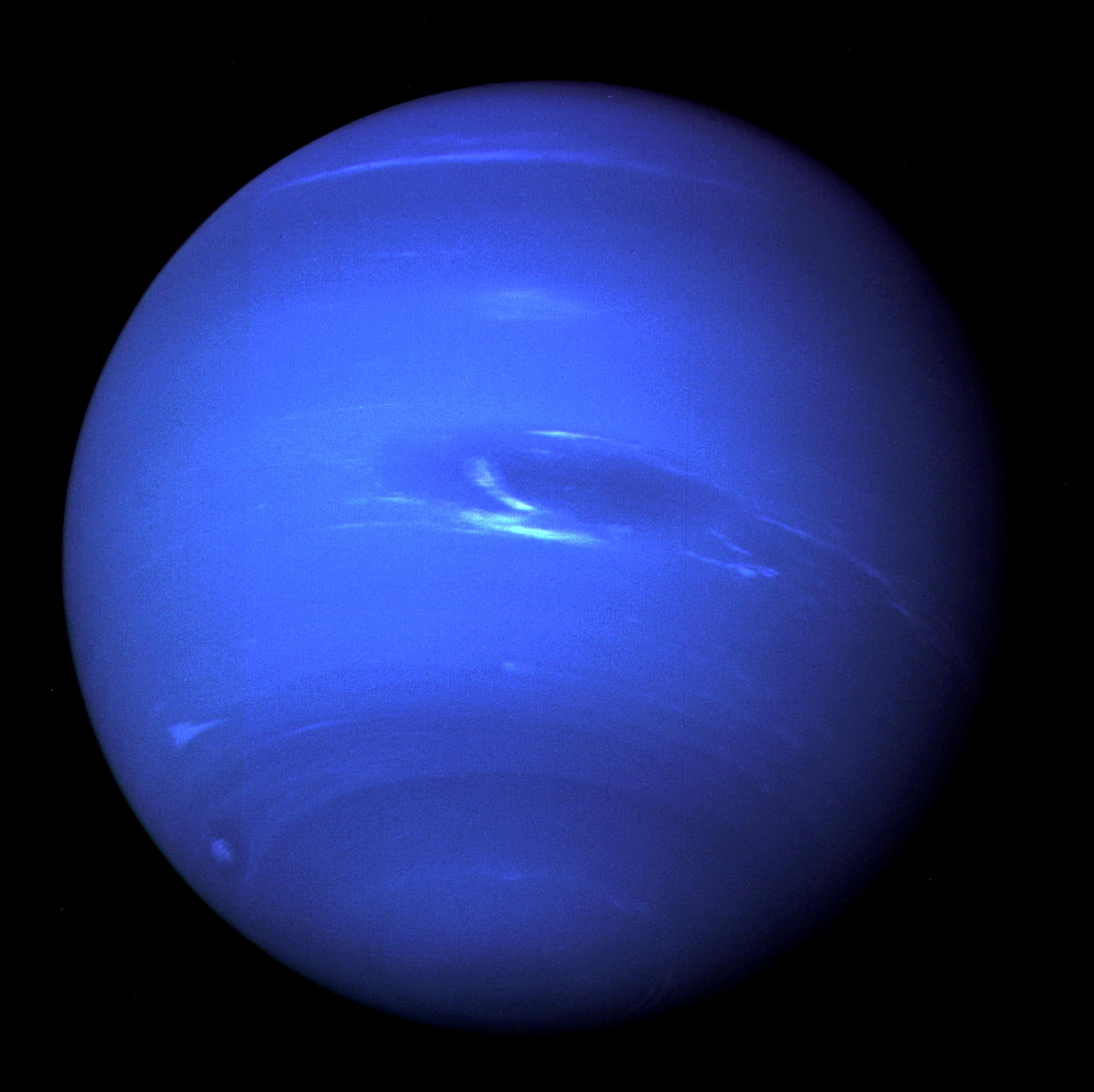
New observations from NASA's James Webb Space Telescope have uncovered mineralogical evidence suggesting a catastrophic event occurred billions of years ago in the vicinity of Neptune. Researchers examined three of Neptune's small inner moons—Proteus, Larissa, and Galatea—along with their inner rings. They detected clay minerals, specifically magnesium-rich ones, which are typically found deep within certain celestial bodies. These minerals require prolonged interaction between liquid water and rock to form, a process unlikely to have occurred on the small, cold moons themselves. Scientists, led by Ryleigh Davis of the University of California San Diego, propose that this clay material originated from the deep interior of a much larger, ancient world. This ancient world was apparently destroyed in a cataclysmic event, with the current small moons and rings forming from the resulting debris. The prime suspect for this ancient disaster is Triton, Neptune's largest moon. Triton is believed to have originated in the Kuiper Belt, a region beyond Neptune, and was captured by Neptune's immense gravitational pull early in the Solar System's history, approximately 4.5 billion years ago. This capture event is thought to have destabilized Neptune's original moons, causing most of them to collide and fragment. The debris from these collisions then coalesced to form the inner moons and rings observed today. Triton's unique retrograde orbit, which is opposite to Neptune's rotation, further supports the theory that it was captured rather than forming in situ. This contrasts with the regular, orderly moon systems observed around Jupiter, Saturn, and Uranus, where moons formed around their host planets. Triton alone accounts for over 99% of the mass in Neptune's satellite system, highlighting its dominant role and the unusual nature of Neptune's planetary system.
The James Webb Space Telescope's findings offer a compelling narrative of planetary system evolution, illustrating how gravitational dynamics can reshape celestial bodies over cosmic timescales. The detection of materials indicative of deep geological processes on small, outer moons suggests that planetary systems are not static but are subject to dramatic, disruptive events. This perspective challenges assumptions about the stability of planetary architectures and highlights the potential for captured objects to fundamentally alter the structure of existing systems. The analysis underscores the importance of understanding these past violent interactions to fully comprehend the current state and future evolution of planetary systems, particularly in the context of exoplanet research where similar dynamic histories may be at play.
AI-generated to prompt reflection — not editorial opinion, not advice, not a statement of fact. How this works.
