Jantar Mantar Protest: Has it Outgrown its Leaders?
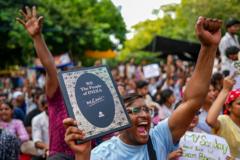
Sonam Wangchuk has ended his hunger strike, while representatives of the 'Cockroach Janata Party' (CJP) are engaged in discussions with the government. However, a significant segment of the ongoing protest at Jantar Mantar feels unrepresented amidst these developments. This large group within the movement expresses dissatisfaction, and their concerns are not being voiced by either Wangchuk or the CJP. The report suggests a disconnect between the leadership engaging with authorities and the broader base of the protest, highlighting a potential crisis of representation within the movement.
The dynamics at Jantar Mantar illustrate a common challenge in social movements: the potential divergence between established leadership engaging with authorities and the broader base of participants. As movements gain traction, ensuring that the diverse voices and evolving demands of all participants are adequately represented becomes critical. The situation prompts reflection on governance structures within protest movements and the mechanisms for maintaining internal cohesion and external legitimacy. Future movements may benefit from developing more inclusive representation models that can adapt to the complexities of negotiation and public discourse, particularly in the evolving landscape of digital communication and citizen mobilization.
AI-generated to prompt reflection — not editorial opinion, not advice, not a statement of fact. How this works.