Jantar Mantar Protest: Is it Outgrowing its Leaders?
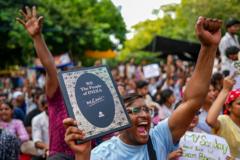
Activist Sonam Wangchuk has ended his hunger strike, while representatives of the Cockroach Janata Party (CJP) are engaged in discussions with the government. However, a significant segment of the protest movement remains unrepresented, expressing discontent that is not being voiced by either Wangchuk or the CJP.
The situation at Jantar Mantar highlights a common dynamic in social movements where the initial leadership or key figures may diverge from the broader base of participants. As the protest evolves, the original catalysts might transition to different forms of engagement, such as ending a hunger strike or entering negotiations, while a substantial group of protestors continue to feel their grievances are not adequately addressed. This divergence can create a vacuum in representation, potentially leading to fragmentation or the emergence of new, unaligned voices. Understanding the evolving needs and demands of the entire protest constituency, beyond its most visible actors, is crucial for assessing the movement's long-term trajectory and its potential impact on policy or governance.
AI-generated to prompt reflection — not editorial opinion, not advice, not a statement of fact. How this works.