Japan Earthquake Death Toll Rises to 34 Amid Ongoing Rescue Efforts
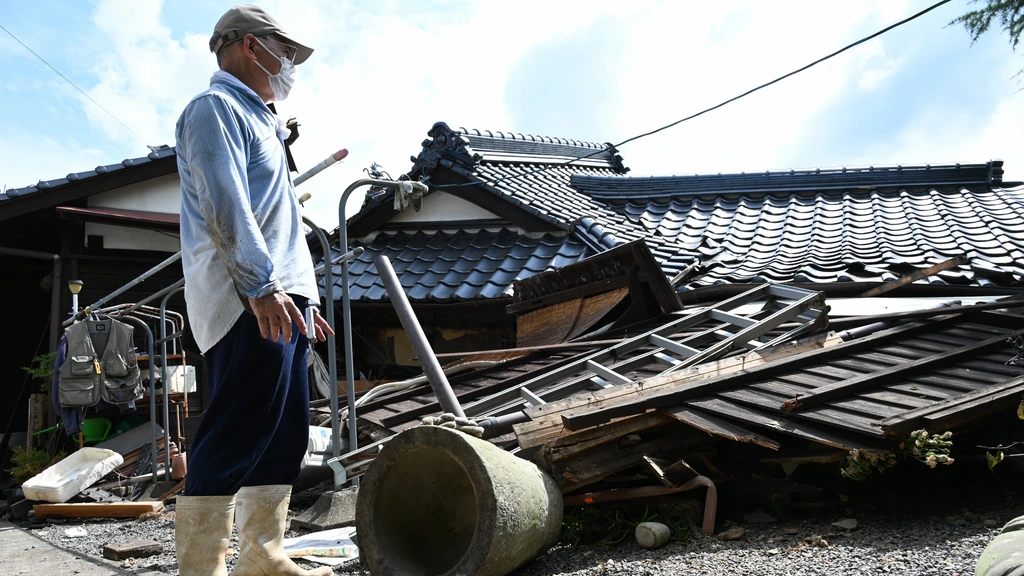
The death toll from a powerful earthquake near Japan's southern island of Kyushu has climbed to 34, according to Japanese broadcaster NHK, with rescue operations still underway. The exact number of missing individuals remains unknown, and at least 63 people have been injured. The Japanese military was deployed immediately after the quakes to provide emergency aid and assist in the search for survivors. Significant destruction has occurred, with numerous buildings, including homes and office structures, sustaining major damage and parts of bridges and factories collapsing. Over 10,000 people are displaced and cannot return to their homes. Tens of thousands of households are without electricity or water, while temperatures in the affected Kumamoto region are expected to exceed 35 degrees Celsius in the coming days.
Rescue teams are sifting through rubble for survivors, and the lack of power has rendered air conditioning inoperable. In response, Japan's Ministry of Defense announced the dispatch of approximately 300 mobile air conditioning units to the region, primarily for shelters. The initial quake on Tuesday registered a magnitude of 7.1, marking the strongest earthquake in Japan in years, with its epicenter near a shopping center where six fatalities were reported. The Aeon Mall Kumamoto collapsed over an hour after the earthquake, following a gas explosion. In the port city of Yatsushiro, south of the epicenter, a factory chimney collapsed, killing eight people, though ten were rescued.
More than 250 aftershocks have been recorded since the initial event, with many residents sleeping in shelters or their cars due to fear of further tremors. Despite Japan's robust earthquake-resistant construction standards, considerable damage to buildings and infrastructure has been observed.
The recent seismic events in Japan highlight the ongoing tension between natural disaster preparedness and the unpredictable nature of geological activity. While Japan's advanced building codes aim to mitigate earthquake damage, the scale of destruction underscores that even sophisticated infrastructure can be overwhelmed by extreme seismic forces. The immediate deployment of military and emergency services demonstrates efficient crisis response, yet the prolonged rescue efforts and the displacement of thousands point to the significant societal and economic recovery challenges ahead. The concurrent threat of extreme heat exacerbates the humanitarian crisis, necessitating rapid provision of essential services like cooling and water. This event serves as a reminder of the systemic vulnerabilities inherent in densely populated areas located in seismically active zones, prompting continued evaluation of infrastructure resilience and emergency management protocols for future events.
AI-generated to prompt reflection — not editorial opinion, not advice, not a statement of fact. How this works.