Japan Mall Disaster: Earthquake Followed by Devastating Explosion
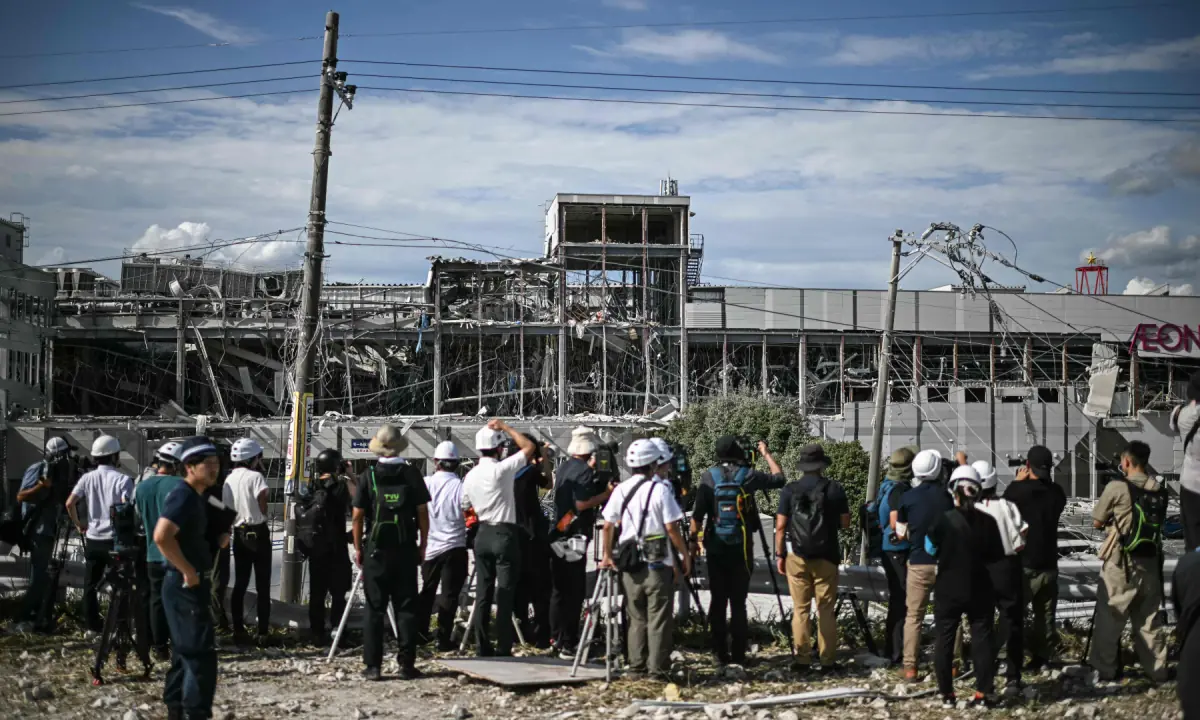
A powerful 7.1-magnitude earthquake struck southern Japan on Tuesday, causing significant damage and shaking a shopping mall in Kumamoto Prefecture. Workers inside the Aeon Mall Kumamoto described being thrown to the floor by the intense tremor. However, the earthquake's impact was compounded by a catastrophic explosion that occurred about an hour later, ripping through the building. Hundreds of shoppers and employees who had been evacuated by staff watched in horror as the blast exposed the mall's steel structure and scattered debris across the parking lot. First responders, initially hesitant due to safety concerns, managed to rescue eight people from the partially collapsed site by early Wednesday, including three fatalities. The status of four store workers remains unknown, according to mall operator Aeon, which is investigating a potential gas leak as the cause of the explosion. The mall, which had recently reopened after extensive seismic reinforcement following a 2016 earthquake, was reportedly equipped with safety features, including seismically reinforced ceilings. Despite the chaos and dust from the quake, mall staff successfully evacuated over 200 people to a car park. However, some individuals reportedly re-entered the building before the explosion. The incident occurred on July 29, 2026, with Japanese Prime Minister Sanae Takaichi describing the rescue efforts as a "race against time." Approximately 170 soldiers were deployed to assist in the operations. Investigations are focusing on a possible LPG leak, as the mall utilized liquefied petroleum gas stored in canisters, which has different safety protocols than piped gas during seismic events.
This incident highlights the complex and often cascading risks associated with natural disasters, particularly in seismically active regions. The sequence of a major earthquake followed by a significant explosion, potentially linked to a gas leak, underscores the importance of comprehensive disaster preparedness that accounts for secondary hazards. While the mall had undergone seismic reinforcement, the subsequent explosion suggests potential vulnerabilities in its gas infrastructure or safety protocols that did not adequately account for the post-earthquake environment. Future resilience planning should consider not only structural integrity against seismic forces but also the integrity and fail-safe mechanisms of utility systems, especially those involving flammable materials, during and after extreme seismic events. The investigation into the LPG system's safety protocols will be crucial in understanding how to prevent similar tragedies, emphasizing the need for robust, multi-layered safety systems that can withstand and respond to the dynamic conditions of major earthquakes.
AI-generated to prompt reflection — not editorial opinion, not advice, not a statement of fact. How this works.