Japan Protests Chinese Live-Fire Drills Near Disputed Island Zone
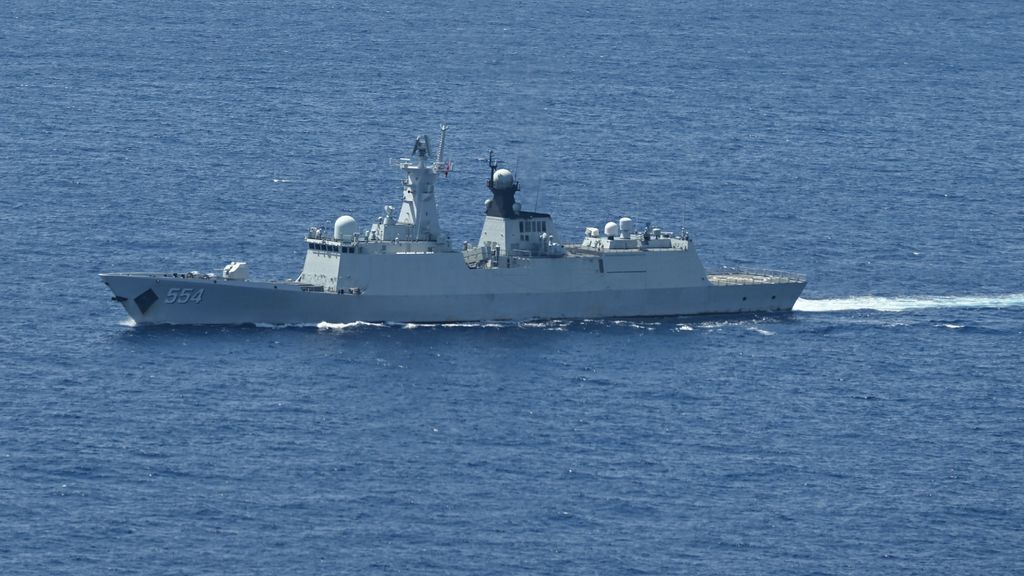
Japan has lodged a formal protest with China after a Chinese navy vessel conducted live-fire drills using live ammunition within an area Japan claims as its exclusive economic zone (EEZ). The incident occurred on Sunday near Okinotorishima, a remote Pacific island. Japanese Chief Cabinet Secretary Minoru Kihara stated that the exercise, involving Chinese missile destroyers and a Russian frigate, highlights the deepening military cooperation between China and Russia. Tokyo expressed concern that the drills posed a safety risk to other vessels and viewed the action as an unnecessary display of force.
China has dismissed Japan's protest as "unfounded," asserting that its ships operated in international waters in compliance with international law. The dispute over Okinotorishima's status is central to the conflict; Japan considers it an island with a 200-nautical-mile EEZ, while China refers to it as a reef or rock, arguing it does not qualify for an EEZ under the UN Convention on the Law of the Sea. Despite this disagreement, foreign military activities are not automatically prohibited within a recognized EEZ.
This incident is part of a broader pattern of increasing Chinese military activity around Japan and in the Pacific. In recent years, China has expanded its military presence, with Chinese and Russian forces conducting more joint operations, including air patrols. Former Admiral Yoji Koda noted that China's incremental actions, like this live-fire exercise, aim to extend its military reach and influence in the Pacific. China, in turn, accuses Japan of exaggerating threats to justify its own defense build-up, labeling it "new militarism."
This event underscores the escalating geopolitical tensions in the Indo-Pacific, driven by competing interpretations of international maritime law and China's expanding military assertiveness. The disagreement over Okinotorishima's status highlights how territorial and resource claims can become flashpoints, especially when coupled with military posturing. The joint Sino-Russian military activities, viewed by Japan as a coordinated challenge, reflect a strategic alignment aimed at projecting power and potentially influencing regional security dynamics. From a systems perspective, these actions can be seen as China testing the boundaries of international norms and Japan's resolve, while also potentially provoking a regional security response that could lead to increased defense spending and alliances. The situation presents a complex trade-off between freedom of navigation, national security interests, and the potential for miscalculation in a densely contested maritime environment.
AI-generated to prompt reflection — not editorial opinion, not advice, not a statement of fact. How this works.