Japan's 30-Year Bond Yield Hits 2% Ceiling: Concerns Over "Broken Thermometer" and "Bad Rise"
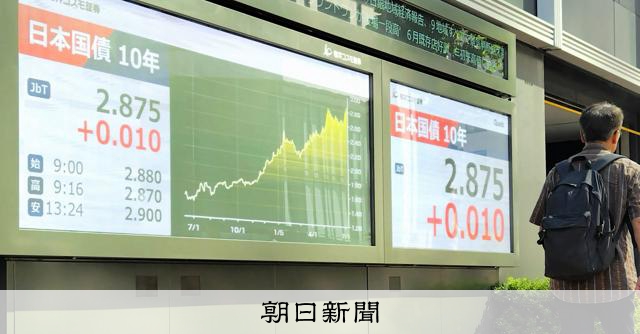
Japan's 30-year government bond yield has reached a ceiling of 2%, a level that has been described metaphorically as a "broken thermometer." This development raises concerns about the nature of the yield's rise, with some characterizing it as a "bad rise." The 2% mark represents a significant psychological and technical barrier for the bond market. The "broken thermometer" analogy suggests that the market's ability to accurately reflect underlying economic conditions may be impaired. A "bad rise" implies that the increase in yields is not driven by healthy economic growth or inflation expectations, but rather by other factors that could be detrimental to the economy. This situation could impact borrowing costs for the government and corporations, potentially influencing investment and consumption patterns. The Bank of Japan's monetary policy stance will likely be a key factor in how this situation evolves. Investors are closely watching for any signals from the central bank regarding its approach to managing yields and inflation. The implications of this yield ceiling extend to broader financial market stability and the overall health of the Japanese economy.
The "broken thermometer" metaphor for Japan's 30-year bond yield at 2% suggests a potential disconnect between market pricing and fundamental economic indicators. This could stem from structural rigidities in the bond market or the influence of central bank policies that distort natural price discovery. A "bad rise" in yields, if not supported by robust economic expansion or healthy inflation, may signal underlying vulnerabilities. The persistence of such conditions could challenge the sustainability of government debt and corporate financing, potentially leading to suboptimal capital allocation. Looking ahead, the interplay between the Bank of Japan's yield curve control policies, global interest rate trends, and domestic inflation dynamics will be critical. The challenge lies in fostering genuine economic vitality without triggering uncontrolled yield increases that could destabilize financial markets or stifle growth.
AI-generated to prompt reflection — not editorial opinion, not advice, not a statement of fact. How this works.