Japan's Hayabusa2 probe flies within 400 meters of asteroid Ryugu
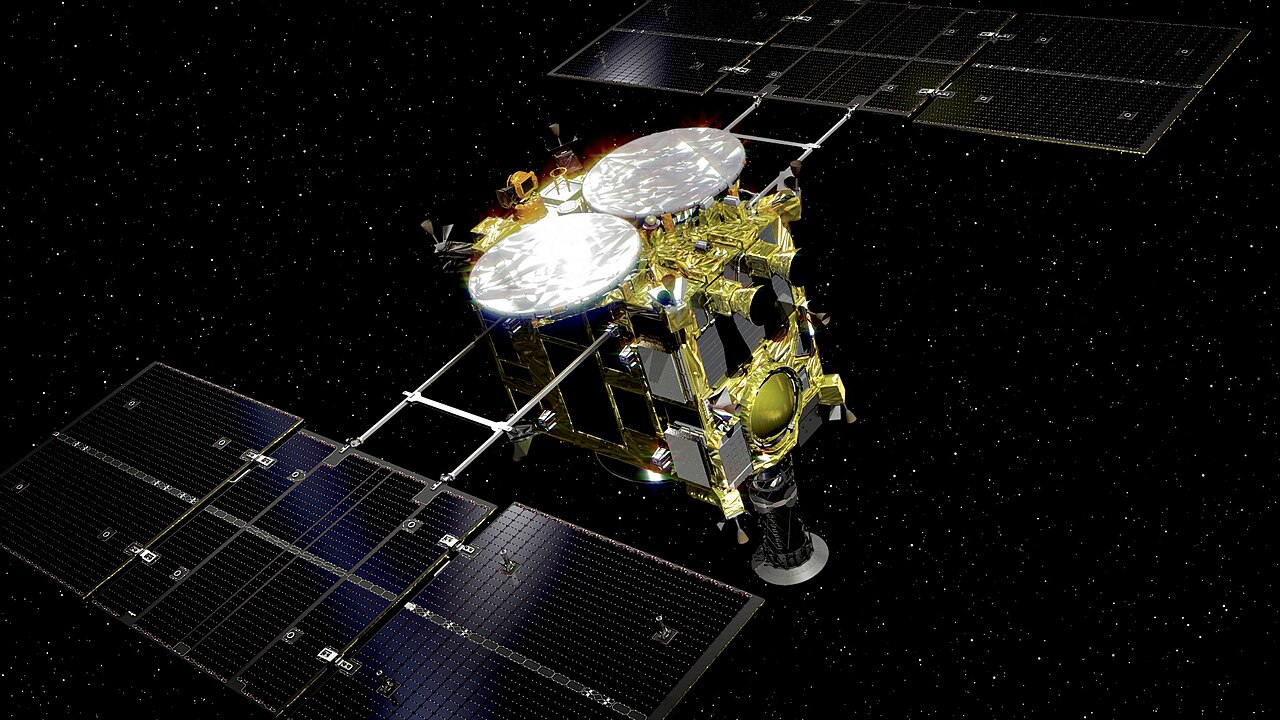
Japan's Hayabusa2 space probe successfully executed a close flyby of the asteroid Ryugu, passing a mere 400 meters above its surface. This maneuver was a critical step in the mission's objectives, which include detailed observation and sample collection from the celestial body. The probe has been orbiting Ryugu since June 2018, conducting extensive surveys and preparing for future operations. Hayabusa2's primary goal is to investigate the asteroid's composition, which could offer clues about the early solar system. The mission also aims to test advanced navigation and landing technologies in the challenging environment of space. Scientists hope that the samples collected will provide insights into the origins of life on Earth. The successful close approach demonstrates the precision and capability of Japan's space exploration technology. This event marks a significant milestone for the Hayabusa2 mission as it progresses towards its sample return phase.
The close flyby of asteroid Ryugu by the Hayabusa2 probe highlights the increasing sophistication of deep-space exploration capabilities. Such missions are crucial for advancing our understanding of planetary formation and the potential for extraterrestrial resources. The precision required for these maneuvers underscores the importance of robust autonomous navigation systems, especially as missions venture further from Earth. Future endeavors will likely leverage these advancements to explore more distant and scientifically significant celestial bodies, potentially paving the way for asteroid mining or the establishment of off-world infrastructure. The success of Hayabusa2 also reinforces the strategic value of national space programs in driving technological innovation and scientific discovery.
AI-generated to prompt reflection — not editorial opinion, not advice, not a statement of fact. How this works.