Japan's Hokuriku Shinkansen Extension: Obayashi-Kyoto Route 'Katsuragawa Plan' in Final Adjustment
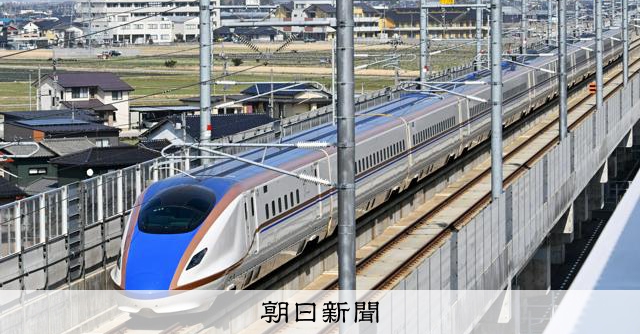
Japan's ruling coalition is in the final stages of adjusting the "Katsuragawa Plan" for the Obayashi-Kyoto route of the Hokuriku Shinkansen extension. This plan is expected to be the chosen route for the significant infrastructure project. The decision follows extensive deliberation and consideration of various proposals for connecting the Hokuriku region to Kyoto via the new Shinkansen line. The "Katsuragawa Plan" has emerged as the preferred option, indicating a consensus among the ruling parties. This extension aims to enhance connectivity and stimulate economic activity between the Hokuriku region and the Kansai area, particularly Kyoto, a major tourist and economic hub. Further details regarding the implementation timeline and specific construction phases are anticipated as the final adjustments are completed. The project represents a major investment in Japan's high-speed rail network.
The finalization of the "Katsuragawa Plan" for the Hokuriku Shinkansen extension signifies a critical juncture in Japan's long-term infrastructure development strategy. This decision, driven by political consensus within the ruling coalition, will shape regional economic disparities and connectivity for decades. The selection of a specific route involves complex trade-offs, balancing engineering feasibility, environmental impact, and the distribution of economic benefits. As high-speed rail networks continue to evolve globally, this project's success will be measured not only by its construction but also by its ability to foster sustainable growth and integrate seamlessly with existing transportation systems in the AI era. Future evaluations should consider the long-term economic viability and the potential for technological integration to maximize the return on this substantial public investment.
AI-generated to prompt reflection — not editorial opinion, not advice, not a statement of fact. How this works.