Japan's ruling party seeks to exclude public from Imperial House Law discussions
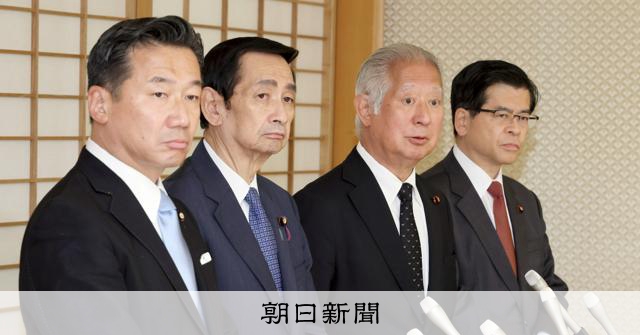
Japan's Liberal Democratic Party (LDP) has proposed that discussions regarding revisions to the Imperial House Law should not be broadcast live to the public. This stance has drawn criticism from opposition parties, who interpret the LDP's request as an attempt to hide something significant from public view. The Imperial House Law governs the succession and status of members of the Japanese Imperial Family. Discussions around potential changes, particularly concerning female succession, have been ongoing. The LDP's desire for closed-door deliberations suggests a sensitivity around the topics being debated. Opposition lawmakers have voiced strong objections, questioning the transparency of the process. They argue that such sensitive matters concerning the future of the Imperial Family should be subject to public scrutiny. The disagreement highlights a fundamental difference in approach to governance and public engagement on issues of national importance. The outcome of these discussions could have long-term implications for the Imperial institution.
The LDP's proposal to exclude public broadcasts from Imperial House Law deliberations raises questions about transparency and public trust. While the party may cite the need for candid discussion or to avoid public misinterpretation of complex legal matters, the opposition's interpretation points to a potential disconnect between the ruling party's objectives and democratic principles of open governance. In the context of evolving societal norms and the increasing demand for accountability, such moves can be perceived as attempts to shield sensitive policy decisions from public discourse. This approach risks alienating segments of the population and may foster skepticism regarding the long-term stability and legitimacy of the Imperial institution, especially if significant changes are being considered without broad public understanding or consensus. Future considerations for governance in this area might benefit from exploring models that balance the need for focused deliberation with robust public engagement mechanisms.
AI-generated to prompt reflection — not editorial opinion, not advice, not a statement of fact. How this works.