Japan's "Sub-Capital" Bill Expected to Pass Lower House on March 15th; Upper House Vote Uncertain
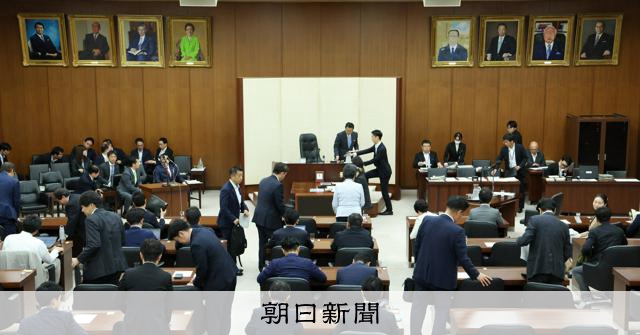
A bill to establish a "sub-capital" in Japan is anticipated to pass the House of Representatives on March 15th. Despite this progress, the bill's future in the House of Councillors remains uncertain. The specific details of the "sub-capital" designation and its implications are not elaborated upon in the provided text. The political party "Mirai" has indicated its support for the bill, but this has not guaranteed a smooth passage through the upper chamber. Further legislative hurdles are expected in the House of Councillors, where the bill's ultimate fate is still in question. The timeline suggests a critical juncture for the legislation in the coming days. The exact nature of the "sub-capital" and the reasons for the uncertainty in the upper house are key points that require further clarification. The bill's progression highlights ongoing legislative efforts to potentially restructure administrative or governmental functions.
The proposed "sub-capital" legislation suggests a potential governmental restructuring initiative aimed at decentralizing or diversifying administrative functions. The uncertainty in the upper house, even with support from a specific party, indicates potential political divisions or concerns regarding the bill's scope, cost, or long-term implications. Evaluating this proposal requires an understanding of Japan's current administrative geography, the historical context of such proposals, and the economic and social benefits or drawbacks of creating a secondary administrative hub. Future considerations should include how this might impact regional development, national resilience, and the efficiency of governance in the face of evolving societal and technological landscapes, particularly concerning distributed workforces and digital infrastructure.
AI-generated to prompt reflection — not editorial opinion, not advice, not a statement of fact. How this works.