Japan Urges Military Reinforcement Amid Rising Regional Threats
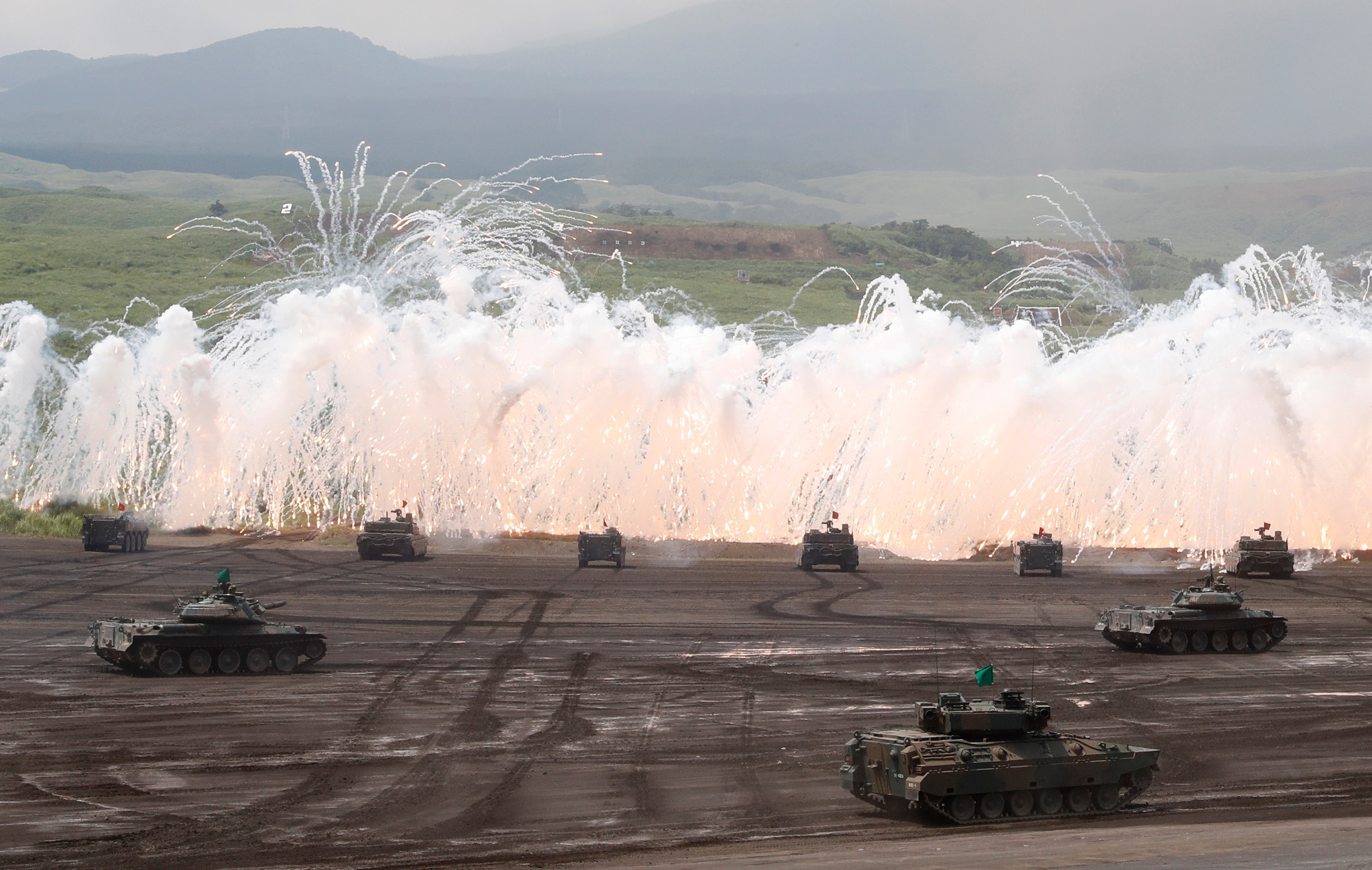
Japan's Defense Minister has declared an urgent need to bolster the nation's armed forces, citing a heightened sense of crisis due to increasing military capabilities and cooperation among China, North Korea, and Russia. This statement accompanies a new government report that underscores the growing risks posed by these neighboring countries. Japan has already been expanding its military spending and security partnerships in the Asia-Pacific region. Recent measures include deploying missile launchers on outlying islands, pursuing "counter-attack" capabilities, and easing arms export regulations. The annual Defense White Paper emphasizes that Japan must further enhance its defense capacities with an unprecedented sense of urgency. The report highlights China's intensified activities around Japan and details various incidents from 2025. In response, China's Ministry of Defense spokesperson, Chen Xi, dismissed the report as containing "false narratives" and serving as a pretext for Japan to relax its own military restrictions. Despite lifting its self-imposed arms export ban in April, the report also points to domestic production issues that could impede acquisitions and innovation. Japanese Defense Minister Shinjiro Koizumi also discussed the strong alliance with the United States and expanded security cooperation with the Philippines, Australia, and South Korea.
Japan's call for urgent military reinforcement reflects a strategic recalibration driven by evolving geopolitical dynamics in the Indo-Pacific. The emphasis on "counter-attack" capabilities and eased arms export norms signals a departure from post-war pacifist tenets, likely influenced by perceived threats from coordinated actions by China, Russia, and North Korea. This strategic shift, while framed as a defensive necessity, could contribute to regional security dilemmas, potentially escalating arms races. The interplay between domestic defense industry challenges and international security alliances, particularly with the US, suggests a complex balancing act. Future developments will likely hinge on how these enhanced capabilities are integrated into broader regional security architectures and whether diplomatic channels can effectively mitigate escalating tensions in the coming decade.
AI-generated to prompt reflection — not editorial opinion, not advice, not a statement of fact. How this works.
